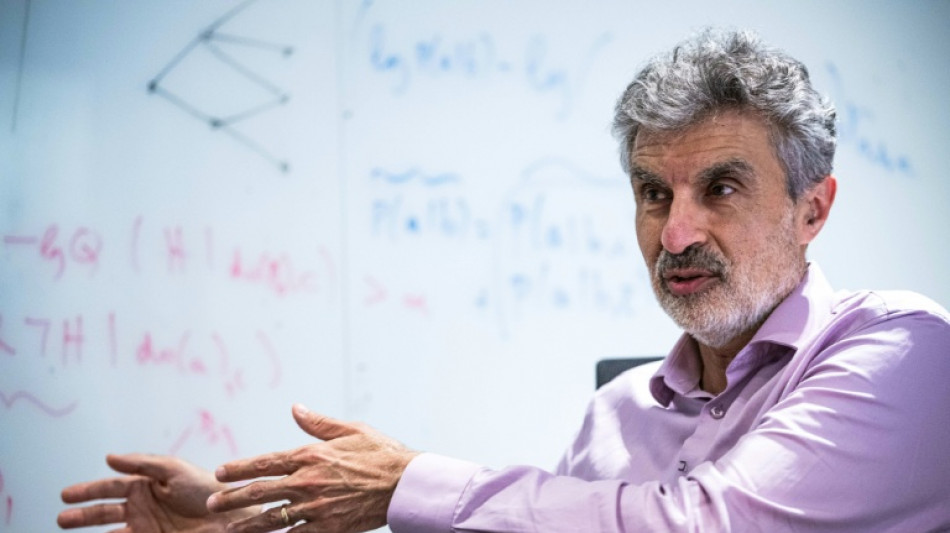
'We're losing control,' AI pioneer Yoshua Bengio tells AFP / Photo: ANDREJ IVANOV - AFP

 London
 19 °C
19 °C

 Manchester
15 °C
Manchester
15 °C
 Glasgow
 17 °C
17 °C
 Dublin
16 °C
Dublin
16 °C
 Belfast
 15 °C
15 °C
 Washington
 28 °C
28 °C
 Denver
24 °C
Denver
24 °C
 Atlanta
 30 °C
30 °C
 Dallas
35 °C
Dallas
35 °C
 Houston Texas
33 °C
Houston Texas
33 °C
 New Orleans
32 °C
New Orleans
32 °C
 El Paso
24 °C
El Paso
24 °C
 Phoenix
33 °C
Phoenix
33 °C
 Los Angeles
23 °C
San Diego
23 °C
San Francisco
16 °C
Chicago
23 °C
Minneapolis
21 °C
Seattle
17 °C
Portland
18 °C
Salt Lake City
26 °C
Las Vegas
31 °C
Miami
32 °C
Jacksonville
31 °C
San Antonio
33 °C
Bermuda
28 °C
Nassau
25 °C
Iqaluit
7 °C
Yellowknife
6 °C
Anchorage
11 °C
Fairbanks
8 °C
Barrow
-1 °C
Calgary
12 °C
Edmonton
33 °C
Winnipeg
14 °C
Goose Bay
23 °C
Halifax
24 °C
Boston
25 °C
Ottawa
24 °C
Toronto
24 °C
Detroit
23 °C
Cleveland
26 °C
New York
25 °C
Baltimore
28 °C
Philadelphia
26 °C
Nuuk (Godthåb)
5 °C
Hong Kong
Los Angeles
23 °C
San Diego
23 °C
San Francisco
16 °C
Chicago
23 °C
Minneapolis
21 °C
Seattle
17 °C
Portland
18 °C
Salt Lake City
26 °C
Las Vegas
31 °C
Miami
32 °C
Jacksonville
31 °C
San Antonio
33 °C
Bermuda
28 °C
Nassau
25 °C
Iqaluit
7 °C
Yellowknife
6 °C
Anchorage
11 °C
Fairbanks
8 °C
Barrow
-1 °C
Calgary
12 °C
Edmonton
33 °C
Winnipeg
14 °C
Goose Bay
23 °C
Halifax
24 °C
Boston
25 °C
Ottawa
24 °C
Toronto
24 °C
Detroit
23 °C
Cleveland
26 °C
New York
25 °C
Baltimore
28 °C
Philadelphia
26 °C
Nuuk (Godthåb)
5 °C
Hong Kong
 27 °C
Singapore
29 °C
Melbourne
28 °C
Canberra
27 °C
Singapore
29 °C
Melbourne
28 °C
Canberra
 1 °C
Adelaide
8 °C
Darwin
24 °C
Perth
21 °C
Fort Worth
35 °C
Honolulu
25 °C
Sydney
10 °C
Johannesburg
22 °C
Dubai
34 °C
Mumbai
28 °C
Zürich
16 °C
Tokyo
1 °C
Adelaide
8 °C
Darwin
24 °C
Perth
21 °C
Fort Worth
35 °C
Honolulu
25 °C
Sydney
10 °C
Johannesburg
22 °C
Dubai
34 °C
Mumbai
28 °C
Zürich
16 °C
Tokyo
 19 °C
Seoul
19 °C
Delhi
19 °C
Seoul
19 °C
Delhi
 30 °C
Beijing
19 °C
Riyadh
35 °C
Prague
21 °C
Pennsylvania
27 °C
Valletta
26 °C
Manama
36 °C
Warsaw
21 °C
Stockholm
16 °C
30 °C
Beijing
19 °C
Riyadh
35 °C
Prague
21 °C
Pennsylvania
27 °C
Valletta
26 °C
Manama
36 °C
Warsaw
21 °C
Stockholm
16 °C
The Canadian computer scientist considered one of the founders of AI, Yoshua Bengio, told AFP that humanity is "losing control" of the technology and that the world needs guardrails similar to nuclear arms controls.
Fears about the dangers of AI have intensified in recent weeks, as workers from major companies have resigned with warnings about potentially existential threats to human life if the pace of technological advancement is not checked.
Bengio is a University of Montreal professor who won the 2018 Turing Award, computing's Nobel, alongside Geoffrey Hinton, widely known as the "godfather of AI."
For Bengio, "there's a reason that companies are saying this is going too fast, that we're losing control."
"People like me have been expecting this for a long time," the 62-year-old told AFP on Tuesday, saying security discussions surrounding AI have not been adequately robust.
There was broad-based alarm after OpenAI disclosed that a swarm of AI agents -- programs that can take actions on their own -- had carried out an unauthorized breach of the open-source platform Hugging Face in July.
Such autonomous action is the central threat, Bengio said, warning of a situation where AI agents "have the ability to get through cybersecurity barriers and enter any company."
- Manipulating human behavior -
Last year, Bengio founded the non-profit LawZero, aimed at creating a new form of advanced AI that is "designed to be trustworthy and safe."
LawZero was awarded CAN$300 million (US$216 million) in funding on Wednesday, split jointly between the governments of Canada and Germany, which have launched several efforts to cooperate on AI.
Speaking to AFP a day before the announcement, Bengio said people need to be aware of the risks ahead.
AI agents may foster "an ability to establish an individual connection and persuade humans to act in ways that suit it but are not necessarily good for all of us," a capability that could have sweeping consequences for democracies, he said.
Longer-term, "AI might not even need human beings anymore to do real things in the physical world," he added.
In that scenario, "one extreme could be the destruction of humanity," he warned.
"That's an extreme," he acknowledged, but noted that even if a banking system were shut down, "that's still very, very serious."
- International challenge -
The world's biggest AI companies -- OpenAI, Anthropic and Google -- have begun working on creating a standards body, a collaboration that seemed to acknowledge the public's fear that competition between companies and countries might sideline safety.
For Bengio, taming AI's advance is "an international challenge, a bit like nuclear weapons are an international challenge."
"So the international community needs to understand the power we are bringing into the world, and that must be managed, must be governed through institutions, treaties, and democratic safeguards."
"Society needs time to put in place what needs to be put in place," Bengio said.
But political will across key governments appears uneven.
US President Donald Trump on Monday dismissed warnings about the risks of AI as "hoaxes."
But there is more openness to act in the EU, where European Commission President Ursula von der Leyen said Wednesday that she will invite the world's largest AI labs for talks on "how we can support ongoing industry efforts to pace the frontier."
Canadian Prime Minister Mark Carney, who was at that speech in Strasbourg, has talked repeatedly about collaborating with the EU on AI safety.
Bengio stressed that all firms must comply with future AI restrictions, particularly US-based companies that have so far been dominating the sector.
Action is urgent, he said, but voiced optimism that "we can help bring the world to a place that is more aligned with democratic values and values of power sharing."
I.Moreau--PS