Violent crime wave beleaguers Israel's Arab youth / Photo: ilia YEFIMOVICH - AFP

 London
 20 °C
20 °C

 Manchester
 17 °C
17 °C
 Glasgow
 15 °C
15 °C
 Dublin
19 °C
Dublin
19 °C
 Belfast
16 °C
Belfast
16 °C
 Washington
26 °C
Washington
26 °C
 Denver
16 °C
Denver
16 °C
 Atlanta
24 °C
Atlanta
24 °C
 Dallas
31 °C
Dallas
31 °C
 Houston Texas
31 °C
Houston Texas
31 °C
 New Orleans
30 °C
New Orleans
30 °C
 El Paso
23 °C
El Paso
23 °C
 Phoenix
 29 °C
29 °C
 Los Angeles
20 °C
San Diego
20 °C
San Francisco
14 °C
Chicago
19 °C
Minneapolis
16 °C
Seattle
11 °C
Portland
13 °C
Salt Lake City
15 °C
Las Vegas
25 °C
Miami
28 °C
Jacksonville
27 °C
San Antonio
28 °C
Bermuda
30 °C
Nassau
18 °C
Iqaluit
5 °C
Yellowknife
Los Angeles
20 °C
San Diego
20 °C
San Francisco
14 °C
Chicago
19 °C
Minneapolis
16 °C
Seattle
11 °C
Portland
13 °C
Salt Lake City
15 °C
Las Vegas
25 °C
Miami
28 °C
Jacksonville
27 °C
San Antonio
28 °C
Bermuda
30 °C
Nassau
18 °C
Iqaluit
5 °C
Yellowknife
 9 °C
Anchorage
9 °C
Anchorage
 7 °C
Fairbanks
4 °C
Barrow
-2 °C
Calgary
13 °C
Edmonton
30 °C
Winnipeg
10 °C
Goose Bay
12 °C
Halifax
17 °C
Boston
16 °C
Ottawa
14 °C
Toronto
17 °C
Detroit
16 °C
Cleveland
20 °C
New York
19 °C
Baltimore
23 °C
Philadelphia
21 °C
Nuuk (Godthåb)
3 °C
Hong Kong
7 °C
Fairbanks
4 °C
Barrow
-2 °C
Calgary
13 °C
Edmonton
30 °C
Winnipeg
10 °C
Goose Bay
12 °C
Halifax
17 °C
Boston
16 °C
Ottawa
14 °C
Toronto
17 °C
Detroit
16 °C
Cleveland
20 °C
New York
19 °C
Baltimore
23 °C
Philadelphia
21 °C
Nuuk (Godthåb)
3 °C
Hong Kong
 29 °C
Singapore
29 °C
Melbourne
29 °C
Canberra
11 °C
Adelaide
13 °C
Darwin
24 °C
Perth
15 °C
Fort Worth
29 °C
Honolulu
26 °C
Sydney
19 °C
Johannesburg
20 °C
Dubai
36 °C
Mumbai
29 °C
Zürich
25 °C
Tokyo
21 °C
Seoul
20 °C
Delhi
30 °C
Beijing
29 °C
Singapore
29 °C
Melbourne
29 °C
Canberra
11 °C
Adelaide
13 °C
Darwin
24 °C
Perth
15 °C
Fort Worth
29 °C
Honolulu
26 °C
Sydney
19 °C
Johannesburg
20 °C
Dubai
36 °C
Mumbai
29 °C
Zürich
25 °C
Tokyo
21 °C
Seoul
20 °C
Delhi
30 °C
Beijing
 19 °C
Riyadh
39 °C
Prague
21 °C
Pennsylvania
21 °C
Valletta
27 °C
Manama
34 °C
Warsaw
20 °C
Stockholm
14 °C
19 °C
Riyadh
39 °C
Prague
21 °C
Pennsylvania
21 °C
Valletta
27 °C
Manama
34 °C
Warsaw
20 °C
Stockholm
14 °C
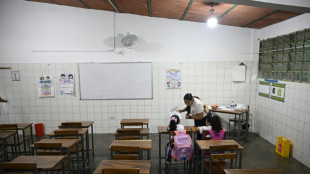
In the four years since her father was fatally stabbed near the entrance of their home in northern Israel, 10-year-old Shireen has carried the burden of grief on her tiny shoulders.
"I loved him so much, I felt safe with him," Shireen, whose name has been changed, told AFP in the seaside town of Jisr al-Zarqa.
"When I found out that I lost him, I was very sad because he was a part of me. It was very difficult for me," the eldest of four siblings said.
Shireen is one of scores of young people grappling with the devastating impact of spiralling violent crime in Israel's Arab minority community -- driven predominantly by criminal gangs, family feuds, easy access to firearms and what the community decries as a lack of police enforcement.
So far this year, more than 140 Arab citizens of Israel have been killed in such violence according to the Abraham Initiatives coexistence organisation -- a 12 percent rise over the same period last year.
If that rate continues, the community will surpass the unprecedented 252 killings recorded in 2025.
The assailant who killed Shireen's father in what the family described as a drunken random attack was a minor and not previously known to them. He was arrested and sentenced to prison.
For young people, the consequences of losing a parent are profound and long-lasting.
"Unfortunately, there's over 232 children who lost a parent in the Arab society only last year because of the crime and the violence," said Hadar Kess, the founder and CEO of Sunflowers, an Israeli organisation supporting young people who have lost parents like Shireen.
In Jewish Israeli society, Kess said that children who had lost a parent were four times more likely to get arrested, and 13 times more likely to drop out of school.
In Arab society, she said, the risk of falling into crime was much higher, with communities generally poorer and the particularly high murder rate driving cycles of revenge.
- Three days, three murders -
Most of Israel's Arab minority identify as Palestinians who remained in what is now Israel after its creation in 1948. They represent about 21 percent of the country's 10.2 million people.
Many in the community say they are discriminated against by the Jewish majority and accuse Israeli authorities of failing to properly investigate the violence.
In the killings that occurred between January and June 26, only 16 indictments were filed, amounting to just 12.3 percent of cases, according to the Abraham Initiatives.
When contacted by AFP, the Israeli police said it was "treating every one of these incidents with the utmost seriousness", including setting up "specialised joint task forces" and meeting with local community leaders.
"It is critical to understand that complex criminal investigations take time," it added, urging "a coordinated national effort" to tackle the issue.
Police said car bombs and gun attacks killed five Arab-Israelis last Sunday alone, in what authorities described as a mixture of criminal incidents and family disputes.
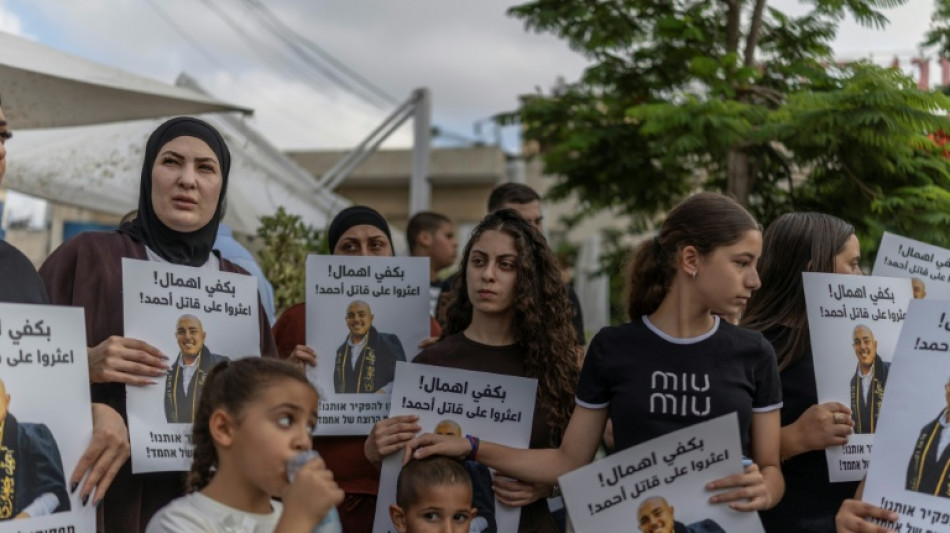
The bloodshed followed the fatal shooting of Ahmed Jabari, 17, just days earlier as he was working at his after-school job in a supermarket in the coastal city of Jaffa.
At a vigil last weekend, community members held placards in solidarity and wept.
"In the last three days in Jaffa, there have been three murders," the chairman of the city's Muslim Council, Abed Abu Shehadeh, said last Sunday.
"We understand perfectly well that these events did not happen by chance but rather they are part of Israeli policies toward our community."
- 'Not who we are' -
For AJEEC -- a Jewish-Arab coexistence organisation promoting youth engagement and professional development -- building a brighter future is key to stopping the cycle of violence.
Through youth programmes, they encourage participants to become active members of their communities and access opportunities such as higher education.
"I believe that it is the circumstances and the environment that have made violence and crime part of our reality -- but this is not who we are," said 19-year-old Bayan, an AJEEC participant from the Arab city of Kafr Qasim in central Israel.
Bayan, whose 30-year-old relative was killed last year, told AFP she felt the violence in her community was rooted in a sense of not belonging, as well as rising costs of living and unemployment.
"It made me ask: Is it worth being in this country, studying here, and in the end dying?" she said.
Najeb Abu Bnaeh, 56, a community organiser with AJEEC in Bedouin villages in southern Israel's Negev, said the people being drawn into crime were only getting younger.
"If we used to talk about 16, today we're talking about 14 or 13," he said.
"The state must make a decision that enough is enough. The violence must stop."
E.Roger--PS