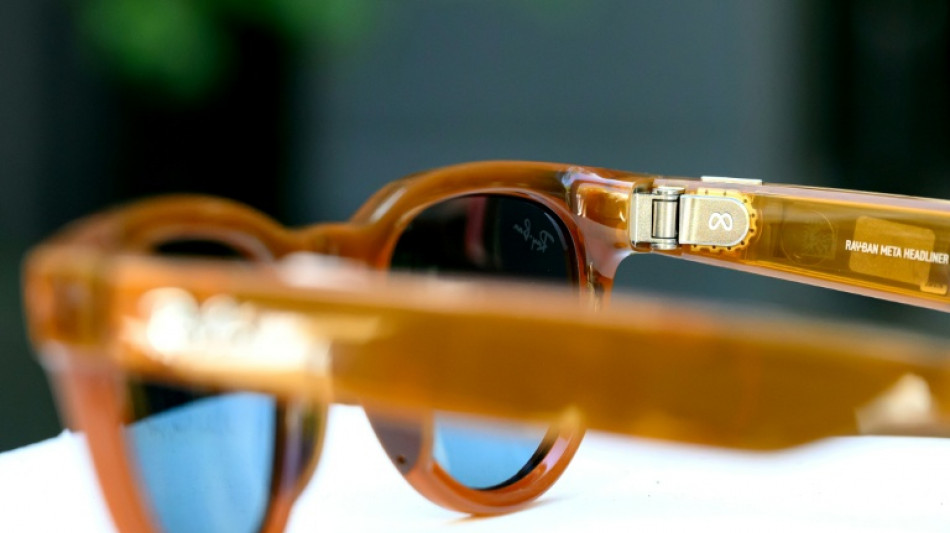
EU watchdog says smart glasses must give 'clear warnings' when recording / Photo: JOSH EDELSON - AFP/File

 London
 19 °C
19 °C
 Manchester
 16 °C
16 °C
 Glasgow
14 °C
Glasgow
14 °C
 Dublin
15 °C
Dublin
15 °C
 Belfast
14 °C
Belfast
14 °C
 Washington
25 °C
Washington
25 °C
 Denver
11 °C
Denver
11 °C
 Atlanta
26 °C
Atlanta
26 °C
 Dallas
 29 °C
29 °C
 Houston Texas
31 °C
Houston Texas
31 °C
 New Orleans
 28 °C
28 °C
 El Paso
23 °C
El Paso
23 °C
 Phoenix
20 °C
Phoenix
20 °C
 Los Angeles
16 °C
San Diego
18 °C
San Francisco
13 °C
Chicago
23 °C
Minneapolis
12 °C
Seattle
10 °C
Portland
9 °C
Salt Lake City
8 °C
Las Vegas
13 °C
Miami
31 °C
Jacksonville
29 °C
San Antonio
29 °C
Bermuda
28 °C
Nassau
20 °C
Iqaluit
Los Angeles
16 °C
San Diego
18 °C
San Francisco
13 °C
Chicago
23 °C
Minneapolis
12 °C
Seattle
10 °C
Portland
9 °C
Salt Lake City
8 °C
Las Vegas
13 °C
Miami
31 °C
Jacksonville
29 °C
San Antonio
29 °C
Bermuda
28 °C
Nassau
20 °C
Iqaluit
 0 °C
Yellowknife
4 °C
Anchorage
3 °C
Fairbanks
-2 °C
Barrow
-4 °C
Calgary
6 °C
Edmonton
28 °C
Winnipeg
6 °C
Goose Bay
0 °C
Yellowknife
4 °C
Anchorage
3 °C
Fairbanks
-2 °C
Barrow
-4 °C
Calgary
6 °C
Edmonton
28 °C
Winnipeg
6 °C
Goose Bay
 8 °C
Halifax
14 °C
Boston
13 °C
Ottawa
5 °C
Toronto
23 °C
Detroit
26 °C
Cleveland
27 °C
New York
21 °C
Baltimore
25 °C
Philadelphia
22 °C
Nuuk (Godthåb)
1 °C
Hong Kong
8 °C
Halifax
14 °C
Boston
13 °C
Ottawa
5 °C
Toronto
23 °C
Detroit
26 °C
Cleveland
27 °C
New York
21 °C
Baltimore
25 °C
Philadelphia
22 °C
Nuuk (Godthåb)
1 °C
Hong Kong
 27 °C
Singapore
29 °C
Melbourne
29 °C
Canberra
9 °C
Adelaide
11 °C
Darwin
27 °C
Singapore
29 °C
Melbourne
29 °C
Canberra
9 °C
Adelaide
11 °C
Darwin
 29 °C
Perth
20 °C
Fort Worth
29 °C
Honolulu
29 °C
Perth
20 °C
Fort Worth
29 °C
Honolulu
 25 °C
Sydney
13 °C
Johannesburg
27 °C
Dubai
34 °C
Mumbai
33 °C
Zürich
16 °C
Tokyo
20 °C
Seoul
14 °C
Delhi
27 °C
Beijing
6 °C
Riyadh
33 °C
Prague
14 °C
Pennsylvania
23 °C
Valletta
25 °C
Manama
33 °C
Warsaw
11 °C
Stockholm
8 °C
25 °C
Sydney
13 °C
Johannesburg
27 °C
Dubai
34 °C
Mumbai
33 °C
Zürich
16 °C
Tokyo
20 °C
Seoul
14 °C
Delhi
27 °C
Beijing
6 °C
Riyadh
33 °C
Prague
14 °C
Pennsylvania
23 °C
Valletta
25 °C
Manama
33 °C
Warsaw
11 °C
Stockholm
8 °C
The European Union's central data regulator on Tuesday said smart glasses should give "clear warnings" when they are recording, after a public outcry in recent months over secretly filmed footage of girls and women.
The European Data Protection Board (EDPB) warned in its non-binding guidance to users and manufacturers that smart glasses raised "serious privacy concerns" as it seeks to increase awareness about the risks.
Individuals wearing smart glasses can take photos, film videos, listen to music, make phone calls, translate text or interact with an AI assistant.
"These devices look like ordinary glasses, but they include cameras and microphones and are connected to the internet. This raises serious privacy concerns, as individuals may be recorded without their knowledge," EDPB chair Anu Talus said in a statement.
"Smart glasses should make their recording obvious -- for instance with bright LED lights, audio signals or voice activation cues, privacy-friendly smartphone notifications, or unique designs," Talus said.
"These warnings need to be reliable, hard to ignore, and always up to date."
The glasses raise questions over the protection of personal data and the rights of individuals, the watchdog said.
The EDPB warned of greater risks in "sensitive" spaces like schools and hospitals as well as public spots like beaches, and raised concerns over children who are "more vulnerable to covert or intrusive processing of their personal data".
The EU has stringent data protection rules. The regulator said if people use the glasses to share a photo or video on a public social media account or in official or professional activities, they must adhere to those rules.
Meta's smart spectacles, developed in partnership with Ray-Ban maker EssilorLuxottica, are the most popular globally, with sales reaching millions around the world. They have a blinking LED light when recording.
The US giant says it has taken multiple steps to prevent users tampering with the light -- a key worry for many.
Other companies including Google and Snap are preparing to roll out their own AI-powered glasses as Big Tech looks for the next big thing in wearable tech.
- Europe eyes more action -
Across Europe, the backlash is growing.
Norway's government said last week it wants a temporary ban on the use of smart glasses in certain public places, citing privacy concerns.
The capital Oslo already opted to ban glasses equipped with cameras in schools.
France's e-Enfance association, which operates the national hotline for victims of online abuse, has also sounded the alarm about videos recorded with camera-equipped glasses and shared online.
And a "Stop Smart Glasses" campaign in Britain and Ireland has launched a petition and call for supporters to contact stores to stop their sale.
It reached over 10,000 signatures, which means the UK government must respond.
K.Grimaud--PS