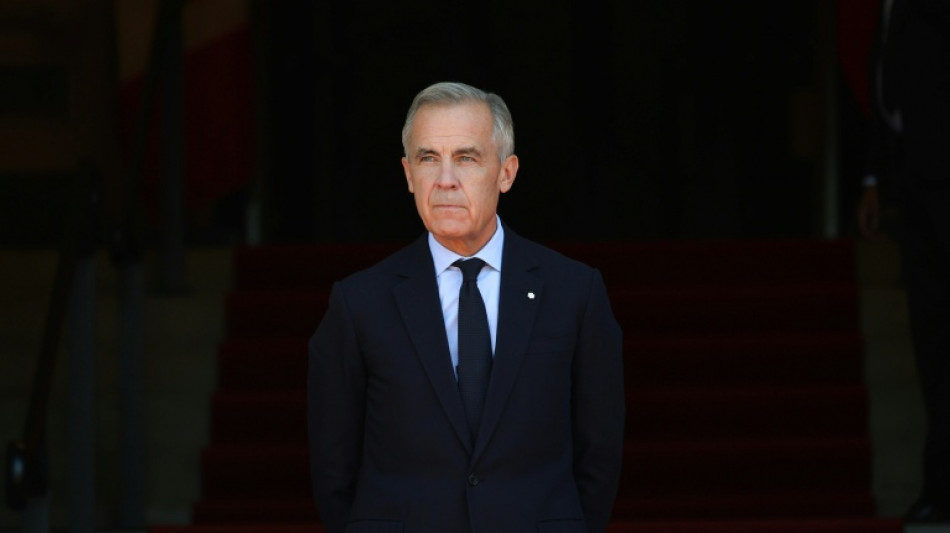
Quebec separatist win rattles Carney's unity push / Photo: Dave Chan - AFP

 London
 20 °C
20 °C

 Manchester
16 °C
Manchester
16 °C
 Glasgow
15 °C
Glasgow
15 °C
 Dublin
12 °C
Dublin
12 °C
 Belfast
13 °C
Belfast
13 °C
 Washington
 18 °C
18 °C
 Denver
 28 °C
28 °C
 Atlanta
24 °C
Atlanta
24 °C
 Dallas
28 °C
Dallas
28 °C
 Houston Texas
31 °C
Houston Texas
31 °C
 New Orleans
26 °C
New Orleans
26 °C
 El Paso
22 °C
El Paso
22 °C
 Phoenix
33 °C
Phoenix
33 °C
 Los Angeles
34 °C
San Diego
35 °C
San Francisco
22 °C
Chicago
21 °C
Minneapolis
Los Angeles
34 °C
San Diego
35 °C
San Francisco
22 °C
Chicago
21 °C
Minneapolis
 22 °C
Seattle
14 °C
Portland
16 °C
Salt Lake City
22 °C
Las Vegas
30 °C
Miami
32 °C
Jacksonville
22 °C
Seattle
14 °C
Portland
16 °C
Salt Lake City
22 °C
Las Vegas
30 °C
Miami
32 °C
Jacksonville
 24 °C
San Antonio
29 °C
Bermuda
27 °C
Nassau
15 °C
Iqaluit
2 °C
Yellowknife
5 °C
Anchorage
5 °C
Fairbanks
24 °C
San Antonio
29 °C
Bermuda
27 °C
Nassau
15 °C
Iqaluit
2 °C
Yellowknife
5 °C
Anchorage
5 °C
Fairbanks
 0 °C
Barrow
-6 °C
Calgary
15 °C
Edmonton
24 °C
Winnipeg
19 °C
Goose Bay
11 °C
Halifax
15 °C
Boston
15 °C
Ottawa
12 °C
Toronto
13 °C
Detroit
19 °C
Cleveland
17 °C
New York
16 °C
Baltimore
17 °C
Philadelphia
16 °C
Nuuk (Godthåb)
3 °C
Hong Kong
26 °C
Singapore
0 °C
Barrow
-6 °C
Calgary
15 °C
Edmonton
24 °C
Winnipeg
19 °C
Goose Bay
11 °C
Halifax
15 °C
Boston
15 °C
Ottawa
12 °C
Toronto
13 °C
Detroit
19 °C
Cleveland
17 °C
New York
16 °C
Baltimore
17 °C
Philadelphia
16 °C
Nuuk (Godthåb)
3 °C
Hong Kong
26 °C
Singapore
 29 °C
Melbourne
29 °C
Canberra
29 °C
Melbourne
29 °C
Canberra
 8 °C
Adelaide
11 °C
Darwin
26 °C
Perth
17 °C
Fort Worth
28 °C
Honolulu
23 °C
Sydney
15 °C
Johannesburg
17 °C
Dubai
35 °C
Mumbai
30 °C
Zürich
8 °C
Adelaide
11 °C
Darwin
26 °C
Perth
17 °C
Fort Worth
28 °C
Honolulu
23 °C
Sydney
15 °C
Johannesburg
17 °C
Dubai
35 °C
Mumbai
30 °C
Zürich
 19 °C
Tokyo
21 °C
Seoul
10 °C
Delhi
29 °C
Beijing
8 °C
Riyadh
34 °C
Prague
17 °C
Pennsylvania
16 °C
Valletta
25 °C
Manama
33 °C
Warsaw
16 °C
Stockholm
13 °C
19 °C
Tokyo
21 °C
Seoul
10 °C
Delhi
29 °C
Beijing
8 °C
Riyadh
34 °C
Prague
17 °C
Pennsylvania
16 °C
Valletta
25 °C
Manama
33 °C
Warsaw
16 °C
Stockholm
13 °C
Prime Minister Mark Carney insists "Canada strong" can defy threats from the United States, but his national unity message faced a new reality Tuesday after a separatist election victory in Quebec.
The Parti Quebecois, which wants the majority French-speaking province to separate from Canada, is returning to power in Quebec after 12 years in opposition.
The PQ victory was partly underwhelming. It fell short of a majority in Quebec's 127-seat parliament and won only 28 percent of the popular vote.
But with an unwavering commitment to break up Canada, the resurgent PQ presents a clear challenge for Carney's effort to steer the country through a storm ignited by US President Donald Trump's trade war and annexation threats.
Carney said he had spoken Tuesday to Quebec's incoming separatist premier, Paul St-Pierre Plamondon, a 49-year-old lawyer known by his initials, PSPP.
"I congratulated him on his victory. We discussed the ways that we would work together," Carney told reporters in Ottawa.
Quebec separatists have lost two previous independence referendums, in 1980 and 1995, and PSPP has promised to call a third after Trump leaves office, saying he doesn't want debate on the issue "hijacked" by the volatile president.
Asked about the prospect of another referendum following the PQ win, Carney sidestepped.
"This is not the time to wait for something a few years down the road," he said. "It's a time to act. It's a time for boldness."
- 'Rocky chapter' for unity -
Polls consistently show support for Quebec independence at roughly 30 percent and, without a legislative majority, the PQ lacks a clear path toward a third referendum.
But the risks of having a separatist government running Canada's second most populous province cannot be dismissed.
"Like it or not, Canada will need to brace itself for another rocky chapter on the unity file," Globe and Mail columnist Konrad Yakabuski wrote Tuesday.
University of Ottawa law professor Errol Mendes told AFP that, hours after the PQ win, "the challenge to Canadian unity was small."
But he expected PSPP to push hard on an issue linked to Quebec separatism that enjoys far broader support: abolishing the role of the British Crown.
The Parti Quebecois says it wants to defund the lieutenant governor, a position that represents King Charles III in Canadian provinces.
Mendes called attacking the monarchy "rabble-rousing," and another way to enforce the idea that Quebec "is being smothered by English Canada."
But 87 percent of Quebecers told the Leger polling firm last year they felt no attachment to the British Crown, and the move could gain traction.
It would also be "blatantly unconstitutional" and would trigger a clash with Carney's government, Yakabuski wrote.
- 'Wait him out?' -
PSPP was accommodating in his victory speech Monday, assuring English-speaking Quebecers that his separatist agenda was not "against" them, while also offering a few unexpected words in English:
"We're all in the same boat and we share the same future," he said.
Carney will need some cooperation as he tries to push through major national infrastructure projects to jumpstart a Canadian economy buckling under US tariffs.
A massive hydropower expansion that runs through Quebec is a priority. Canadian premiers have broad authority, and a PQ government could stall those plans indefinitely.
But many experts tied the separatist surge to frustration over affordability and a general desire for change.
Mendes said the PQ could wobble if it opposes popular, job-creating projects, and noted that minority governments are notoriously unstable, often lasting less than two years.
PSPP "is not as strong as he thought he was going to be," Mendes said. "Carney can just wait him out."
M.Marie--PS