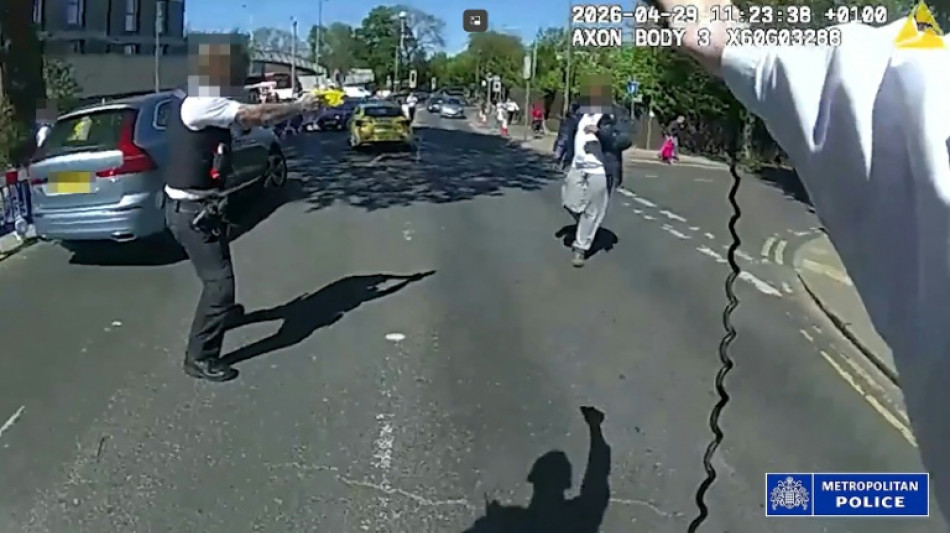
Suspect appears in UK court charged with attacking two Jewish men / Photo: Handout - Metropolitan Police/AFP/File

 London
 12 °C
12 °C

 Manchester
 11 °C
11 °C
 Glasgow
 10 °C
10 °C
 Dublin
15 °C
Dublin
15 °C
 Belfast
14 °C
Belfast
14 °C
 Washington
 15 °C
15 °C
 Denver
23 °C
Denver
23 °C
 Atlanta
21 °C
Atlanta
21 °C
 Dallas
30 °C
Dallas
30 °C
 Houston Texas
 28 °C
28 °C
 New Orleans
27 °C
New Orleans
27 °C
 El Paso
29 °C
El Paso
29 °C
 Phoenix
35 °C
Phoenix
35 °C
 Los Angeles
27 °C
San Diego
25 °C
San Francisco
16 °C
Chicago
15 °C
Minneapolis
15 °C
Seattle
15 °C
Portland
18 °C
Salt Lake City
23 °C
Las Vegas
Los Angeles
27 °C
San Diego
25 °C
San Francisco
16 °C
Chicago
15 °C
Minneapolis
15 °C
Seattle
15 °C
Portland
18 °C
Salt Lake City
23 °C
Las Vegas
 34 °C
Miami
27 °C
Jacksonville
20 °C
San Antonio
30 °C
Bermuda
26 °C
Nassau
14 °C
Iqaluit
2 °C
Yellowknife
6 °C
Anchorage
12 °C
Fairbanks
16 °C
Barrow
3 °C
Calgary
5 °C
Edmonton
16 °C
Winnipeg
17 °C
Goose Bay
15 °C
Halifax
14 °C
Boston
14 °C
Ottawa
15 °C
Toronto
17 °C
Detroit
16 °C
Cleveland
14 °C
New York
14 °C
Baltimore
15 °C
Philadelphia
15 °C
Nuuk (Godthåb)
0 °C
Hong Kong
30 °C
Singapore
28 °C
Melbourne
23 °C
Canberra
12 °C
Adelaide
17 °C
Darwin
30 °C
Perth
16 °C
Fort Worth
30 °C
Honolulu
27 °C
Sydney
34 °C
Miami
27 °C
Jacksonville
20 °C
San Antonio
30 °C
Bermuda
26 °C
Nassau
14 °C
Iqaluit
2 °C
Yellowknife
6 °C
Anchorage
12 °C
Fairbanks
16 °C
Barrow
3 °C
Calgary
5 °C
Edmonton
16 °C
Winnipeg
17 °C
Goose Bay
15 °C
Halifax
14 °C
Boston
14 °C
Ottawa
15 °C
Toronto
17 °C
Detroit
16 °C
Cleveland
14 °C
New York
14 °C
Baltimore
15 °C
Philadelphia
15 °C
Nuuk (Godthåb)
0 °C
Hong Kong
30 °C
Singapore
28 °C
Melbourne
23 °C
Canberra
12 °C
Adelaide
17 °C
Darwin
30 °C
Perth
16 °C
Fort Worth
30 °C
Honolulu
27 °C
Sydney
 14 °C
Johannesburg
14 °C
Dubai
31 °C
Mumbai
27 °C
Zürich
11 °C
Tokyo
21 °C
Seoul
25 °C
Delhi
22 °C
Beijing
21 °C
Riyadh
29 °C
Prague
10 °C
Pennsylvania
16 °C
Valletta
23 °C
Manama
32 °C
Warsaw
11 °C
Stockholm
8 °C
14 °C
Johannesburg
14 °C
Dubai
31 °C
Mumbai
27 °C
Zürich
11 °C
Tokyo
21 °C
Seoul
25 °C
Delhi
22 °C
Beijing
21 °C
Riyadh
29 °C
Prague
10 °C
Pennsylvania
16 °C
Valletta
23 °C
Manama
32 °C
Warsaw
11 °C
Stockholm
8 °C
A 45-year-old man appeared in a UK court Friday charged with stabbing two Jewish men in north London earlier this week, in the latest attack to rock Britain's Jewish community.
Essa Suleiman, a UK national born in Somalia, was remanded in custody after being charged with three attempted murder counts and one of possessing a knife in public.
Two attempted murder charges relate to Wednesday's attack in Golders Green, which is home to a large Jewish population. It has left community members feeling increasingly vulnerable and highly critical of authorities.
The other attempted murder count covers a separate south London incident earlier Wednesday in which the knife-wielding suspect allegedly attacked a man he knew, prosecutors said.
Suleiman appeared in the dock at Westminster Magistrates' Court flanked by two guards, dressed in a grey tracksuit and sporting a bruised face.
Footage of his arrest in Golders Green showed police using an electroshock weapon before forcibly restraining him on the ground.
The court heard he had been living at a mental health facility in the capital.
He spoke only to confirm his name, and will next appear at London's Old Bailey court on May 15.
Following the stabbings as well as a spate of arson attacks targeting the Jewish community and other growing extremist threats, Britain's security services has raised the terrorism threat level to "severe".
The first change in more than four years and the second highest level in the five-tier system, it means another attack "is highly likely in the next six months".
- 'Pandemic of antisemitism' -
Counter Terrorism Policing is leading the ongoing investigation into the stabbings, which unfolded in broad daylight on a Golders Green street.
Two men -- aged 76 and 34 -- were taken to hospital after suffering knife wounds. The 34-year-old has since been released while the 76-year-old remains in a stable condition in hospital, according to police.
The government vowed Thursday to boost security for the Jewish community, pledging an extra £25 million ($33 million) to protect Jewish synagogues, schools, places of worship and community centres.
Met Police Commissioner Mark Rowley revealed he was discussing with ministers and officials creating a 300-strong neighbourhood policing team, including specialist armed officers, for the Jewish community in north London.
But he told BBC radio on Friday it would require "long-term, sustained investment".
Warning the country was "facing a building pandemic of antisemitism", the country's most senior officer cautioned police could only "deal with the symptoms of that disease".
"We need work done upstream to tackle those attitudes in society which are far too prevalent," he said on Times Radio.
Prime Minister Keir Starmer echoed that sentiment Thursday, as he faced accusations from angry British Jews that his government has repeatedly failed to protect them.
He endured boos and heckles when visiting Golders Green.
In a later televised address from Downing Street, he urged Britons to unite against antisemitism, calling on "everyone decent in this country to open their eyes to Jewish pain, Jewish suffering and Jewish fear".
- Protests in spotlight -
Wednesday's stabbings came nearly seven months after a deadly attack at a Manchester synagogue.
Monitoring groups have reported a surge in antisemitic and Islamophobic incidents in Britain, particularly since the war between Israel and Hamas in Gaza began.
Starmer is now under growing pressure to place fresh curbs on contentious pro-Palestinian protests, which critics claim are a hotbed of antisemitism.
His government last year handed police increased powers to regulate them.
Counter-terror policing head Laurence Taylor said Thursday officers will review "all events across the country" after the threat level change, "to ensure that we have appropriate protective security measures in place".
A large London march is planned for May 16 to mark Nakba Day, commemorating the 1948 displacement of Palestinians during the creation of Israel.
However, Rowley noted that "a complete moratorium on protests" would require "emergency legislation".
"There's no power at the moment to stop a protest happening," he said, noting police can currently only place conditions on demonstrations, such as making them "a static event"
Organisers of the protests have hit back at the criticism.
"Attempts by some to connect the series of horrific antisemitic attacks in north London with marches in solidarity with Palestine are false," the Stop the War Coalition said on X.
U.Andre--PS