Diesel Power Returns to Forefront as Toyota HiLux Tops October Australian Sales

 London
 9 °C

 Manchester
 10 °C
 Glasgow
 4 °C
 Dublin
10 °C
 Belfast
10 °C
 Washington
22 °C
 Denver
 15 °C
 Atlanta
 26 °C
 Dallas
27 °C
 Houston Texas
28 °C
 New Orleans
25 °C
 El Paso
21 °C
 Phoenix
25 °C
 Los Angeles
26 °C
San Diego
 25 °C
San Francisco
19 °C
Chicago
12 °C
Minneapolis
6 °C
Seattle
14 °C
Portland
15 °C
Salt Lake City
13 °C
Las Vegas
19 °C
Miami
28 °C
Jacksonville
27 °C
San Antonio
28 °C
Bermuda
24 °C
Nassau
20 °C
Iqaluit
 -5 °C
Yellowknife
3 °C
Anchorage
2 °C
Fairbanks
-6 °C
Barrow
 -3 °C
Calgary
12 °C
Edmonton
22 °C
Winnipeg
5 °C
Goose Bay
18 °C
Halifax
20 °C
Boston
23 °C
Ottawa
19 °C
Toronto
15 °C
Detroit
15 °C
Cleveland
18 °C
New York
22 °C
Baltimore
23 °C
Philadelphia
22 °C
Nuuk (Godthåb)
1 °C
Hong Kong
26 °C
Singapore
26 °C
Melbourne
28 °C
Canberra
10 °C
Adelaide
11 °C
Darwin
28 °C
Perth
16 °C
Fort Worth
27 °C
Honolulu
27 °C
Sydney
15 °C
Johannesburg
22 °C
Dubai
29 °C
Mumbai
29 °C
Zürich
6 °C
Tokyo
15 °C
Seoul
7 °C
Delhi
19 °C
Beijing
0 °C
Riyadh
26 °C
Prague
3 °C
Pennsylvania
23 °C
Valletta
 19 °C
Manama
30 °C
Warsaw
5 °C
Stockholm
5 °C
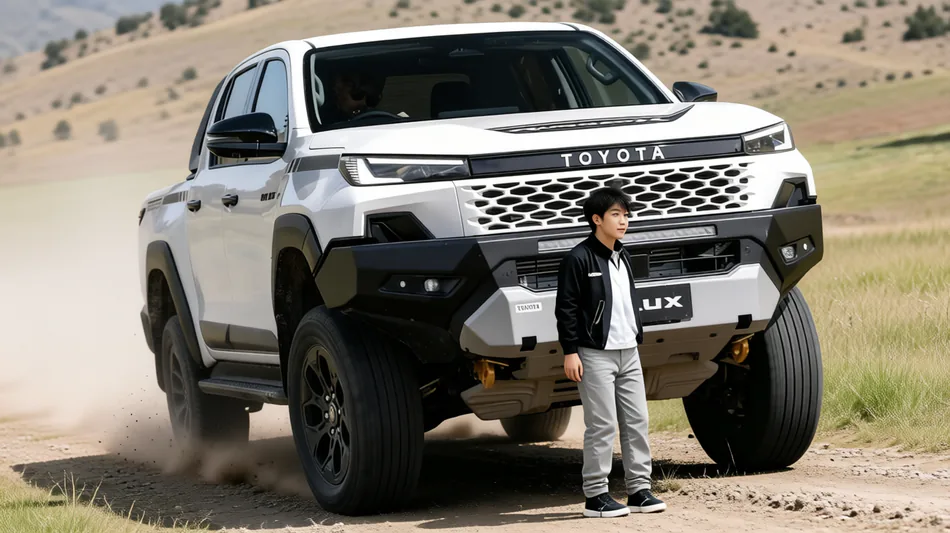
The Toyota HiLux reclaimed the top spot in Australia’s new-vehicle market for October 2026, delivering 5,954 units to end electric vehicles' two-month reign. Total sales rose 6.8% year-on-year to 107,493, while diesel powertrains briefly overtook EVs in monthly share despite a broader annual decline.
The Toyota HiLux has reclaimed the top position in Australia’s new-vehicle market for October 2026, ending a two-month period during which electric vehicles (EVs) held the largest monthly share. With 5,954 deliveries, the pickup truck secured its first individual model victory of the year, overtaking the Ford Ranger, which had won the title in September and three other months earlier in the calendar.
Total new-vehicle sales reached 107,493 units in October, representing a 6.8 percent increase compared to the same month last year. This growth contributes to a strong year-to-date performance, with cumulative sales now standing at 1,065,191 units, up 2.5 percent from the first ten months of 2025. The continued upward trajectory suggests that 2026 is on track to surpass 2025 as a record year for new-vehicle sales in Australia.
The return of diesel to the top spot came despite a significant decline in overall diesel volume. Diesel sales fell 14.7 percent year-on-year in October. However, the margin between diesel and electric powertrains was narrow, with diesels capturing 23.9 percent of the market share and EVs holding 23.1 percent. In contrast, petrol-powered vehicles remain the dominant force on a cumulative basis for the year, claiming 27.5 percent of total sales, followed by diesel at 24.3 percent and EVs at 19.3 percent.
The Toyota HiLux’s victory in October was notable as it overtook the Ford Ranger, which had won the monthly title in September and three other months earlier in the year. The HiLux also closed the gap on its arch-rival in year-to-date sales, though the Ranger remains slightly ahead overall with 42,699 deliveries compared to the HiLux’s cumulative total.
Toyota maintained its position as Australia’s most popular auto brand for October, with sales rising 4.7 percent year-on-year to 20,649 units. Meanwhile, BYD solidified its status as the second-most popular brand in the country. The Chinese manufacturer recorded its second consecutive month of exceeding 10,000 sales, reaching 10,025 units in October alone. This performance represents a 153.2 percent increase year-on-year and extends BYD’s streak of securing second place every month since April.
The competition for third place among traditional brands intensified in October. Ford took the bronze medal position with 7,310 deliveries, despite a 3.4 percent decline in sales compared to the previous year. Kia followed in fourth place with 5,801 units, maintaining a comfortable lead over sister brand Hyundai, which sold 4,571 vehicles. Mazda rounded out the top five non-Chinese brands with 5,730 deliveries, a 19.7 percent drop year-on-year. The introduction of its new CX-6e electric SUV is expected to influence future performance as it competes against the Tesla Model Y, which remains Australia’s best-selling EV.
MG delivered 4,676 vehicles in October, finishing ahead of all other Chinese brands except BYD. This result marked a 31.5 percent increase year-on-year, driven by strong sales of its small hatchbacks and the HS mid-size SUV. However, specific models faced challenges: the ZS small SUV declined by 16.1 percent, and the recently launched U9 ute saw a sharp drop of 61 percent.
The top ten brands list was completed by Hyundai, GWM, Geely, and Chery. Among Chinese manufacturers in the top ten, only GWM experienced a decline, with deliveries falling a modest 0.3 percent to 4,417 units. The broader trend continues to show Chinese brands posting increases while many non-Chinese brands report declines. Several brands, including Cadillac, Mahindra, Smart, and newcomer Lepas, do not currently report sales data to VFACTS or the Electric Vehicle Council.
In the individual model rankings, the Toyota HiLux’s 5,954 deliveries placed it well ahead of the Ford Ranger at 4,841. The top five was completed by the Toyota RAV4 medium SUV with 4,718 units, the Tesla Model Y with 3,105 units, and the BYD Sealion 7 mid-size electric SUV with 2,524 units. The Sealion 7 is increasingly competing with the Model Y for dominance in the electric segment.
The large SUV segment saw the Toyota Prado outsell its rival, the Ford Everest, with 2,397 deliveries compared to 1,741. Year-to-date, the Prado leads the Everest 18,062 to 17,944. The top ten models list was rounded out by Chinese entries: the Chery Tiggo 4 (2,178 units), BYD Atto 2 (1,943 units), BYD Shark 6 ute (1,843 units), and Geely EX5 mid-size electric SUV (1,789 units). The Ford Everest narrowly missed the top ten, finishing eleventh.
Market segmentation data reveals that SUVs continue to dominate the Australian landscape, holding 62.6 percent of the market share in October. Light commercial vehicles accounted for 20.0 percent, passenger cars for 14.4 percent, and heavy commercial vehicles for 3.0 percent. Medium SUVs were the largest single segment with 31,970 sales, up 23.8 percent year-on-year. Small SUVs followed with 18,756 units, an increase of 12.1 percent.
Sales by fuel type showed diesel leading with 25,649 units, followed closely by electric vehicles at 24,845. Petrol sales totaled 23,605 units, hybrids reached 18,434, and plug-in hybrid electric vehicles (PHEVs) accounted for 11,745 units.
Geographically, New South Wales recorded the highest sales with 30,580 units, followed by Victoria with 28,336 and Queensland with 21,762. Western Australia contributed 11,687 units. All states and territories reported year-on-year growth except for South Australia, which saw a slight decline of 0.5 percent.
Buyer type data indicates that private buyers accounted for 50,876 units, up 5.2 percent year-on-year. Business purchases followed with 40,211 units, an increase of 5.7 percent. Rental fleet sales rose 1.3 percent to 6,469 units, while government purchases declined by 10.9 percent to 2,554 units.
Sales by country of origin highlighted the rapid expansion of Chinese vehicles, which accounted for 41,671 units, a massive increase of 104.2 percent year-on-year. Japanese brands sold 24,089 units, down 13.1 percent. Thai-made vehicles contributed 18,505 units, a decrease of 11.1 percent. Korean brands sold 9,531 units, down 23.5 percent, while German brands accounted for 3,745 units, a decline of 24.0 percent.
The shift in powertrain preference and brand dominance reflects ongoing changes in the Australian automotive market. While electric vehicles have shown strong monthly performance, diesel’s resurgence in October underscores its continued relevance in the national fleet. The close competition between traditional Japanese brands and emerging Chinese manufacturers continues to reshape the top ten rankings, with BYD’s sustained growth posing a significant challenge to established players.
D.Gautier--PS