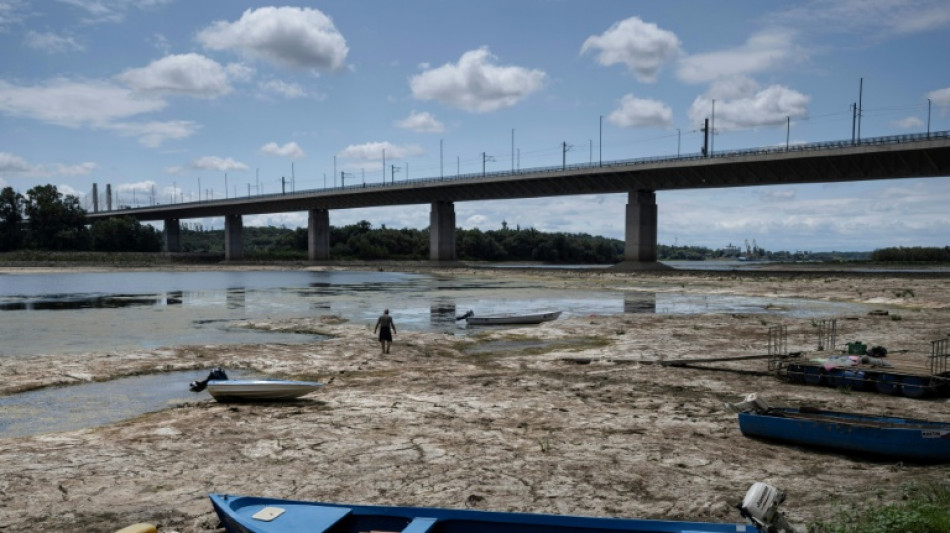
Mammoth bones found on parched bed of Danube in Bulgaria / Photo: Nikolay DOYCHINOV - AFP

 London
 12 °C
12 °C

 Manchester
 14 °C
14 °C
 Glasgow
 16 °C
16 °C
 Dublin
13 °C
Dublin
13 °C
 Belfast
13 °C
Belfast
13 °C
 Washington
 21 °C
21 °C
 Denver
 15 °C
15 °C
 Atlanta
22 °C
Atlanta
22 °C
 Dallas
23 °C
Dallas
23 °C
 Houston Texas
27 °C
Houston Texas
27 °C
 New Orleans
27 °C
New Orleans
27 °C
 El Paso
22 °C
El Paso
22 °C
 Phoenix
29 °C
Phoenix
29 °C
 Los Angeles
22 °C
San Diego
22 °C
San Francisco
15 °C
Chicago
16 °C
Minneapolis
11 °C
Seattle
15 °C
Portland
21 °C
Salt Lake City
17 °C
Las Vegas
28 °C
Miami
26 °C
Jacksonville
26 °C
San Antonio
23 °C
Bermuda
24 °C
Nassau
20 °C
Iqaluit
4 °C
Yellowknife
6 °C
Anchorage
3 °C
Fairbanks
1 °C
Barrow
-6 °C
Calgary
8 °C
Edmonton
25 °C
Winnipeg
5 °C
Goose Bay
19 °C
Halifax
19 °C
Boston
20 °C
Ottawa
18 °C
Toronto
19 °C
Detroit
21 °C
Cleveland
24 °C
New York
22 °C
Baltimore
21 °C
Philadelphia
22 °C
Nuuk (Godthåb)
2 °C
Hong Kong
31 °C
Singapore
32 °C
Melbourne
27 °C
Canberra
Los Angeles
22 °C
San Diego
22 °C
San Francisco
15 °C
Chicago
16 °C
Minneapolis
11 °C
Seattle
15 °C
Portland
21 °C
Salt Lake City
17 °C
Las Vegas
28 °C
Miami
26 °C
Jacksonville
26 °C
San Antonio
23 °C
Bermuda
24 °C
Nassau
20 °C
Iqaluit
4 °C
Yellowknife
6 °C
Anchorage
3 °C
Fairbanks
1 °C
Barrow
-6 °C
Calgary
8 °C
Edmonton
25 °C
Winnipeg
5 °C
Goose Bay
19 °C
Halifax
19 °C
Boston
20 °C
Ottawa
18 °C
Toronto
19 °C
Detroit
21 °C
Cleveland
24 °C
New York
22 °C
Baltimore
21 °C
Philadelphia
22 °C
Nuuk (Godthåb)
2 °C
Hong Kong
31 °C
Singapore
32 °C
Melbourne
27 °C
Canberra
 15 °C
Adelaide
18 °C
Darwin
15 °C
Adelaide
18 °C
Darwin
 33 °C
Perth
33 °C
Perth
 22 °C
Fort Worth
23 °C
Honolulu
27 °C
Sydney
24 °C
Johannesburg
5 °C
Dubai
31 °C
Mumbai
22 °C
Fort Worth
23 °C
Honolulu
27 °C
Sydney
24 °C
Johannesburg
5 °C
Dubai
31 °C
Mumbai
 31 °C
Zürich
15 °C
Tokyo
20 °C
Seoul
20 °C
Delhi
29 °C
Beijing
19 °C
Riyadh
29 °C
Prague
11 °C
Pennsylvania
20 °C
Valletta
23 °C
Manama
32 °C
Warsaw
9 °C
Stockholm
13 °C
31 °C
Zürich
15 °C
Tokyo
20 °C
Seoul
20 °C
Delhi
29 °C
Beijing
19 °C
Riyadh
29 °C
Prague
11 °C
Pennsylvania
20 °C
Valletta
23 °C
Manama
32 °C
Warsaw
9 °C
Stockholm
13 °C
Sinking water levels in the Danube river have unveiled bones of a mammoth in Bulgaria and could lead to further discoveries, a local museum director told AFP on Thursday.
The bone fragments found near the northeastern city of Ruse "very likely" belonged to a woolly mammoth that lived during the Ice Age, said Nikolay Nenov, director of the Regional Historical Museum.
Specialists have so far identified a jaw bone, fragments of tusks, part of a shoulder blade and a femur with its articular head among the stash, Nenov said.
The animal is thought to have been young and the dark colour of the bones may indicate that it spent a lot of time in a marshy environment, he added.
The bones are an important discovery because they are well preserved and "unlike many previous discoveries... were concentrated in the same place", indicating that they all belonged to the same animal, Nenov said.
Woolly mammoths co-existed with early humans who hunted the cold-resistant herbivores for food and used their tusks and bones as tools.
The animals died out about 4,000 years ago. For decades, scientists have been recovering bits and pieces of mammoth tusks, bones, teeth and hair.
The remains in Bulgaria were spotted by chance on Wednesday by a resident of the village of Ryahovo in the Ruse region, before being collected on Thursday by experts from the museum.
The Danube -- which runs from the Black Forest mountains of western Germany through 10 countries to the Black Sea -- has dropped to record low levels in parts due to prolonged rain shortages and successive heatwaves since May.
Specialists are now planning a new search of the area in the hope of finding other remains, Nenov said.
S.Denis--PS