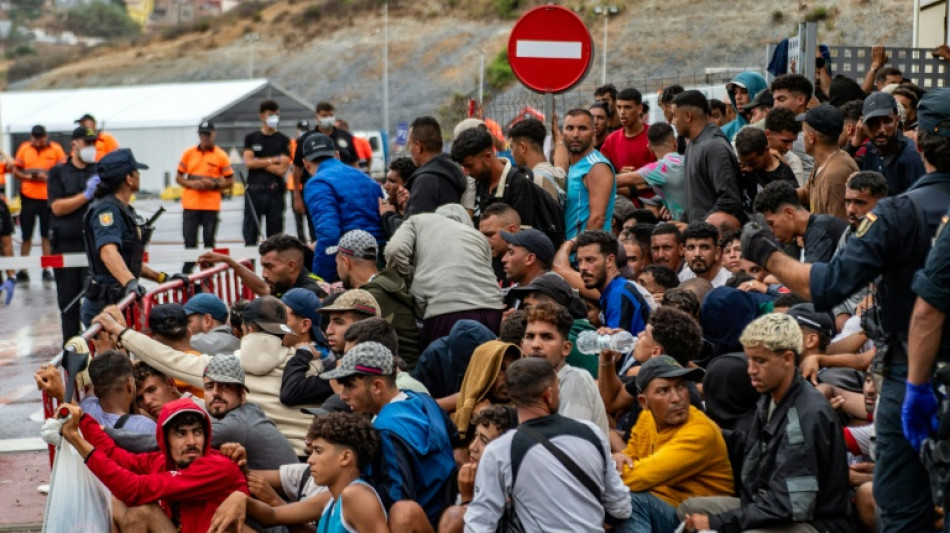
Spanish PM says no 'solid proof' Morocco planned Ceuta migrant rush / Photo: Antonio Sempere - AFP

 London
 24 °C
24 °C

 Manchester
21 °C
Manchester
21 °C
 Glasgow
20 °C
Glasgow
20 °C
 Dublin
21 °C
Dublin
21 °C
 Belfast
19 °C
Belfast
19 °C
 Washington
24 °C
Washington
24 °C
 Denver
 17 °C
17 °C
 Atlanta
26 °C
Atlanta
26 °C
 Dallas
26 °C
Dallas
26 °C
 Houston Texas
28 °C
Houston Texas
28 °C
 New Orleans
27 °C
New Orleans
27 °C
 El Paso
 25 °C
25 °C
 Phoenix
 29 °C
29 °C
 Los Angeles
19 °C
San Diego
18 °C
San Francisco
16 °C
Chicago
28 °C
Minneapolis
23 °C
Seattle
Los Angeles
19 °C
San Diego
18 °C
San Francisco
16 °C
Chicago
28 °C
Minneapolis
23 °C
Seattle
 13 °C
Portland
13 °C
Salt Lake City
13 °C
Portland
13 °C
Salt Lake City
 15 °C
Las Vegas
24 °C
Miami
15 °C
Las Vegas
24 °C
Miami
 27 °C
Jacksonville
27 °C
Jacksonville
 27 °C
San Antonio
27 °C
Bermuda
29 °C
Nassau
22 °C
Iqaluit
8 °C
Yellowknife
16 °C
Anchorage
7 °C
Fairbanks
0 °C
Barrow
0 °C
Calgary
14 °C
Edmonton
23 °C
Winnipeg
15 °C
Goose Bay
21 °C
Halifax
20 °C
Boston
18 °C
Ottawa
20 °C
Toronto
20 °C
Detroit
23 °C
Cleveland
23 °C
New York
22 °C
Baltimore
24 °C
Philadelphia
22 °C
Nuuk (Godthåb)
5 °C
Hong Kong
29 °C
Singapore
30 °C
Melbourne
26 °C
Canberra
10 °C
Adelaide
27 °C
San Antonio
27 °C
Bermuda
29 °C
Nassau
22 °C
Iqaluit
8 °C
Yellowknife
16 °C
Anchorage
7 °C
Fairbanks
0 °C
Barrow
0 °C
Calgary
14 °C
Edmonton
23 °C
Winnipeg
15 °C
Goose Bay
21 °C
Halifax
20 °C
Boston
18 °C
Ottawa
20 °C
Toronto
20 °C
Detroit
23 °C
Cleveland
23 °C
New York
22 °C
Baltimore
24 °C
Philadelphia
22 °C
Nuuk (Godthåb)
5 °C
Hong Kong
29 °C
Singapore
30 °C
Melbourne
26 °C
Canberra
10 °C
Adelaide
 13 °C
Darwin
26 °C
Perth
17 °C
Fort Worth
25 °C
Honolulu
25 °C
Sydney
17 °C
Johannesburg
25 °C
Dubai
39 °C
Mumbai
30 °C
Zürich
26 °C
Tokyo
26 °C
Seoul
25 °C
Delhi
33 °C
Beijing
21 °C
Riyadh
41 °C
Prague
23 °C
Pennsylvania
22 °C
Valletta
33 °C
Manama
39 °C
Warsaw
24 °C
Stockholm
18 °C
13 °C
Darwin
26 °C
Perth
17 °C
Fort Worth
25 °C
Honolulu
25 °C
Sydney
17 °C
Johannesburg
25 °C
Dubai
39 °C
Mumbai
30 °C
Zürich
26 °C
Tokyo
26 °C
Seoul
25 °C
Delhi
33 °C
Beijing
21 °C
Riyadh
41 °C
Prague
23 °C
Pennsylvania
22 °C
Valletta
33 °C
Manama
39 °C
Warsaw
24 °C
Stockholm
18 °C
Spanish Prime Minister Pedro Sanchez on Thursday insisted there was no "solid proof" Morocco orchestrated July's migrant rush into Ceuta, after a police report alleged failings by Moroccan security forces.
But the Socialist leader slammed "unacceptable" Moroccan government comments about Ceuta since the crisis began, in rare public criticism of neighbouring Rabat which claims the north African enclave.
More than 70,000 migrants crossed into Ceuta from Morocco on July 30 and 31 in an unprecedented surge that left scores dead, most by drowning as they tried to swim around a breakwater.
The leftist government has consistently avoided blaming Morocco and has tried for years to improve their historically delicate relations -- notably over the status of Ceuta and Spain's other north African territory, Melilla.
But a Spanish police report seen by AFP on Wednesday flagged a Moroccan police response of "total permissiveness" that it said facilitated the rush, with some officers directing migrants towards the water.
Moroccan police numbers around the border post were "clearly smaller than usual" and officers "made no serious attempt" to stem the surge, said the report, based on satellite images, open-source videos and migrant testimonies.
Addressing parliament on Thursday to offer explanations about the crisis, Sanchez said no police, legal or international institutions had submitted "solid proof to the government of Spain that Morocco planned or executed the incident".
"If this solid proof existed, we would act accordingly," said Sanchez, who maintained that the government received no prior warning of the scale of the incident.
A few days after the influx, a Moroccan source close to the case denied to AFP any "relaxation" at the land border crossing.
The Moroccan interior ministry has blamed the sudden surge on the "malicious exploitation" of social media and the "spread of misleading information".
- 'Unacceptable' comments -
Sanchez also slammed as "unacceptable" comments about Ceuta and Melilla by two Moroccan government ministers, revealing Spain summoned Morocco's ambassador on August 21.
Moroccan media quoted Justice Minister Abdellatif Ouahbi in August as saying Rabat had "historic" and "geographical" rights over Ceuta and Melilla, calling for a "final solution" that would allow the territories to "return to the fold of the motherland".
Ceuta and Melilla will remain Spanish "until the end of time", Sanchez told parliament on Thursday.
The conservative and far-right opposition has consistently questioned Morocco's role and accuses Sanchez of subservience to Rabat.
The leader of the main opposition right-wing Popular Party, Alberto Nunez Feijoo, rubbished Sanchez's explanations and demanded his resignation "for incompetence" or "complicity" after "a possible act of hybrid warfare".
Some analysts have suggested Morocco used the migrant rush to exert political pressure on Spain after Sanchez visited Rabat's historic enemy Algeria in July.
The disputed Western Sahara is a source of tension, with Morocco largely controlling the former Spanish colony that is claimed by the Algerian-backed pro-independence Polisario Front.
- King to visit? -
Sanchez revealed the government had urged King Felipe VI to travel to Ceuta and Melilla "in the coming weeks", in rare public comments about royal matters that could inflame relations with Morocco.
The last trip by a Spanish monarch to the cities in 2007 sparked a diplomatic crisis.
Although most of the migrants who streamed into Ceuta have returned to Morocco, thousands continue to roam the small city's streets and sleep rough, increasing tensions among locals who feel abandoned.
Tens of thousands of people protested across Spain on Wednesday in solidarity with Ceuta and to criticise the government's handling of the crisis.
But he later denied having "the slightest intention of triggering a diplomatic conflict" with Morocco.
E.Robert--PS