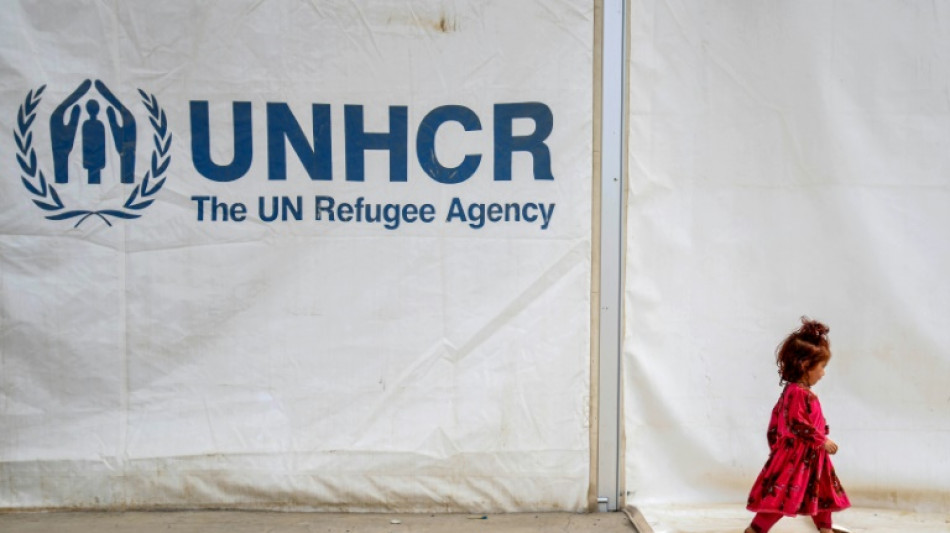
UN sounds alarm on politicisation of refugees and asylum / Photo: Sanaullah SEIAM - AFP/File

 London
 18 °C
18 °C

 Manchester
 16 °C
16 °C
 Glasgow
17 °C
Glasgow
17 °C
 Dublin
17 °C
Dublin
17 °C
 Belfast
17 °C
Belfast
17 °C
 Washington
18 °C
Washington
18 °C
 Denver
 12 °C
12 °C
 Atlanta
20 °C
Atlanta
20 °C
 Dallas
 22 °C
22 °C
 Houston Texas
24 °C
Houston Texas
24 °C
 New Orleans
25 °C
New Orleans
25 °C
 El Paso
 19 °C
19 °C
 Phoenix
26 °C
Phoenix
26 °C
 Los Angeles
20 °C
San Diego
21 °C
San Francisco
14 °C
Chicago
14 °C
Minneapolis
7 °C
Seattle
12 °C
Portland
15 °C
Salt Lake City
16 °C
Las Vegas
23 °C
Miami
27 °C
Jacksonville
24 °C
San Antonio
23 °C
Bermuda
Los Angeles
20 °C
San Diego
21 °C
San Francisco
14 °C
Chicago
14 °C
Minneapolis
7 °C
Seattle
12 °C
Portland
15 °C
Salt Lake City
16 °C
Las Vegas
23 °C
Miami
27 °C
Jacksonville
24 °C
San Antonio
23 °C
Bermuda
 25 °C
Nassau
19 °C
Iqaluit
2 °C
Yellowknife
4 °C
Anchorage
2 °C
Fairbanks
-1 °C
Barrow
-6 °C
Calgary
7 °C
Edmonton
23 °C
Winnipeg
5 °C
Goose Bay
17 °C
Halifax
18 °C
Boston
20 °C
Ottawa
17 °C
Toronto
14 °C
Detroit
13 °C
Cleveland
19 °C
New York
20 °C
Baltimore
18 °C
Philadelphia
19 °C
Nuuk (Godthåb)
2 °C
Hong Kong
25 °C
Nassau
19 °C
Iqaluit
2 °C
Yellowknife
4 °C
Anchorage
2 °C
Fairbanks
-1 °C
Barrow
-6 °C
Calgary
7 °C
Edmonton
23 °C
Winnipeg
5 °C
Goose Bay
17 °C
Halifax
18 °C
Boston
20 °C
Ottawa
17 °C
Toronto
14 °C
Detroit
13 °C
Cleveland
19 °C
New York
20 °C
Baltimore
18 °C
Philadelphia
19 °C
Nuuk (Godthåb)
2 °C
Hong Kong
 29 °C
Singapore
33 °C
Melbourne
27 °C
Canberra
13 °C
Adelaide
14 °C
Darwin
29 °C
Perth
29 °C
Singapore
33 °C
Melbourne
27 °C
Canberra
13 °C
Adelaide
14 °C
Darwin
29 °C
Perth
 20 °C
Fort Worth
23 °C
Honolulu
25 °C
Sydney
19 °C
Johannesburg
18 °C
Dubai
38 °C
Mumbai
37 °C
Zürich
17 °C
Tokyo
20 °C
Seoul
19 °C
Delhi
36 °C
Beijing
22 °C
Riyadh
40 °C
Prague
16 °C
Pennsylvania
17 °C
Valletta
24 °C
Manama
36 °C
Warsaw
18 °C
Stockholm
17 °C
20 °C
Fort Worth
23 °C
Honolulu
25 °C
Sydney
19 °C
Johannesburg
18 °C
Dubai
38 °C
Mumbai
37 °C
Zürich
17 °C
Tokyo
20 °C
Seoul
19 °C
Delhi
36 °C
Beijing
22 °C
Riyadh
40 °C
Prague
16 °C
Pennsylvania
17 °C
Valletta
24 °C
Manama
36 °C
Warsaw
18 °C
Stockholm
17 °C
Refugees fleeing persecution too often face restrictions on their right to seek asylum, with the debate around protection becoming increasingly politicised, the United Nations warned Tuesday.
UN refugees chief Barham Salih urged the world to move from managing sky-high displacement to seeking to resolve it, at an event marking the 75th anniversary of the Refugee Convention.
"We gather at a time of increasingly politicised debates about refugees and asylum," said Iraqi ex-president Salih, himself a former refugee.
"Too often, people forced to flee become scapegoats for wider social, economic and political anxieties," he said at the UN's Palais des Nations in Geneva, where the convention was opened for signature on July 28, 1951.
"Too often, refugees are portrayed as burdens or threats rather than as fellow human beings."
Some 117.8 million people worldwide were forcibly displaced from their homes at the end of 2025, according to UNHCR, the UN refugee agency -- down from 2024's record 123.2 million.
Of those 117.8 million, 35.6 million were refugees under UNHCR's mandate, with two-thirds coming from Venezuela, Ukraine, Syria, Afghanistan and Sudan.
Last year's drop was the first in a decade, as conflicts in Iran and Lebanon spurred many refugees hosted there to return home, often under risky circumstances, including to Syria and Afghanistan.
- Emotional return to Syria -
Salih said he would visit Syria next week, adding that had the world acted sooner to end the 2011-2024 civil war, millions might not have fled towards neighbouring countries and Europe.
Syrian refugee swimmer Yusra Mardini, 28, who almost drowned at sea fleeing her war-torn country before competing at the 2016 and 2020 Olympics, told the event that a few months ago, she too had returned to Syria for the first time.
"I watched families crossing back into their country with tears of joy, only to find homes, schools, roads and hospitals completely destroyed," she said, her voice breaking with emotion.
She is among the initial 75 initial signatories of the "Promise" initiative to reaffirm the right of persecuted people to seek safety in other countries, alongside others including actors Angelina Jolie, Cate Blanchett and Ben Stiller, and Nobel Peace Prize winners Malala Yousafzai and Nadia Murad.
- 'Questioned, restricted, denied' -
In a message, UN chief Antonio Guterres said that the convention, agreed in the aftermath of World War II, had "saved millions of lives".
"Today, that promise is under strain. Conflicts are multiplying, persecution persists, and growing numbers are forced to flee. Meanwhile, the right to seek asylum is too often questioned, restricted, or denied."
The number of people forcibly displaced worldwide has almost doubled in the last decade -- while funding has slumped.
The United States was by far UNHCR's biggest donor but has dramatically scaled back overseas aid, while other countries are also tightening their budgets.
UNHCR's funding was cut by around 35 percent last year. It shed nearly 5,000 jobs in 2025 -- more than a quarter of its workforce.
"Undoubtedly, the budget cuts have had a huge impact on our ability to deliver as UNHCR," Salih told reporters, adding: "We need to have more support".
He said Washington remained a "vital" partner and "we are hopeful that this partnership will continue".
Salih said he favoured protecting asylum systems from abuse, and while countries had the right to exercise border controls, he insisted refugees were a "unique category" fleeing violence and persecution -- and not merely people "seeking a better life".
C.Blanc--PS