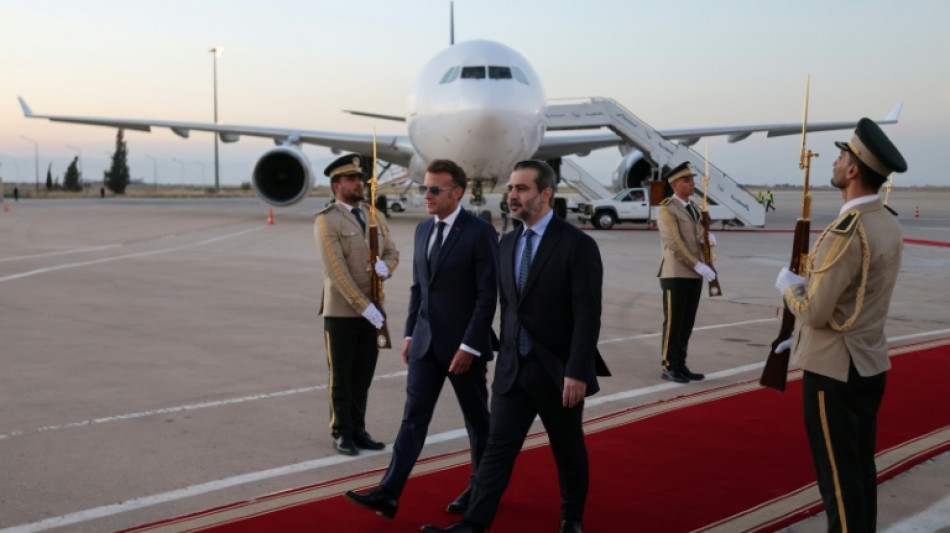
Macron in Syria on first post-Assad visit by West European head of state / Photo: Ludovic MARIN - AFP

 London
 12 °C
12 °C

 Manchester
 10 °C
10 °C
 Glasgow
10 °C
Glasgow
10 °C
 Dublin
14 °C
Dublin
14 °C
 Belfast
12 °C
Belfast
12 °C
 Washington
 26 °C
26 °C
 Denver
28 °C
Denver
28 °C
 Atlanta
29 °C
Atlanta
29 °C
 Dallas
32 °C
Dallas
32 °C
 Houston Texas
33 °C
Houston Texas
33 °C
 New Orleans
28 °C
New Orleans
28 °C
 El Paso
 27 °C
27 °C
 Phoenix
37 °C
Phoenix
37 °C
 Los Angeles
32 °C
San Diego
31 °C
San Francisco
24 °C
Chicago
23 °C
Minneapolis
19 °C
Seattle
18 °C
Portland
Los Angeles
32 °C
San Diego
31 °C
San Francisco
24 °C
Chicago
23 °C
Minneapolis
19 °C
Seattle
18 °C
Portland
 22 °C
Salt Lake City
28 °C
Las Vegas
34 °C
Miami
22 °C
Salt Lake City
28 °C
Las Vegas
34 °C
Miami
 32 °C
Jacksonville
26 °C
San Antonio
32 °C
Bermuda
26 °C
Nassau
24 °C
Iqaluit
0 °C
Yellowknife
5 °C
Anchorage
7 °C
Fairbanks
-2 °C
Barrow
-12 °C
Calgary
12 °C
Edmonton
29 °C
Winnipeg
15 °C
Goose Bay
16 °C
Halifax
22 °C
Boston
22 °C
Ottawa
17 °C
Toronto
18 °C
Detroit
21 °C
Cleveland
21 °C
New York
24 °C
Baltimore
26 °C
Philadelphia
25 °C
Nuuk (Godthåb)
2 °C
Hong Kong
32 °C
Jacksonville
26 °C
San Antonio
32 °C
Bermuda
26 °C
Nassau
24 °C
Iqaluit
0 °C
Yellowknife
5 °C
Anchorage
7 °C
Fairbanks
-2 °C
Barrow
-12 °C
Calgary
12 °C
Edmonton
29 °C
Winnipeg
15 °C
Goose Bay
16 °C
Halifax
22 °C
Boston
22 °C
Ottawa
17 °C
Toronto
18 °C
Detroit
21 °C
Cleveland
21 °C
New York
24 °C
Baltimore
26 °C
Philadelphia
25 °C
Nuuk (Godthåb)
2 °C
Hong Kong
 27 °C
Singapore
27 °C
Singapore
 28 °C
Melbourne
29 °C
Canberra
4 °C
Adelaide
20 °C
Darwin
28 °C
Melbourne
29 °C
Canberra
4 °C
Adelaide
20 °C
Darwin
 26 °C
Perth
15 °C
Fort Worth
31 °C
Honolulu
26 °C
Sydney
10 °C
Johannesburg
18 °C
Dubai
36 °C
Mumbai
32 °C
Zürich
11 °C
Tokyo
18 °C
Seoul
12 °C
Delhi
27 °C
Beijing
10 °C
Riyadh
32 °C
Prague
12 °C
Pennsylvania
24 °C
Valletta
25 °C
Manama
32 °C
Warsaw
17 °C
Stockholm
13 °C
26 °C
Perth
15 °C
Fort Worth
31 °C
Honolulu
26 °C
Sydney
10 °C
Johannesburg
18 °C
Dubai
36 °C
Mumbai
32 °C
Zürich
11 °C
Tokyo
18 °C
Seoul
12 °C
Delhi
27 °C
Beijing
10 °C
Riyadh
32 °C
Prague
12 °C
Pennsylvania
24 °C
Valletta
25 °C
Manama
32 °C
Warsaw
17 °C
Stockholm
13 °C
French President Emmanuel Macron arrived in Damascus on Monday for the first visit by a Western European head of state since Syria's new authorities took power in 2024.
Macron, who will depart on Tuesday, will advocate for "a free, pluralist Syria that respects each of its components" and plays a role in moderating Middle East tensions, the French presidency told journalists ahead of the visit.
Syrian Foreign Minister Asaad al-Shaibani welcomed Macron upon arrival, according to an AFP journalist.
President Ahmed al-Sharaa has been rebooting Syria's international credentials and seeking to revive his struggling country after toppling longtime ruler Bashar al-Assad in December 2024.
The last French president to visit the country was Nicolas Sarkozy in 2009, before Assad brutally crushed pro-democracy protests in 2011, sparking a conflict that killed more than half a million people and devastated Syria's infrastructure and industry.
A deadly bombing at a Damascus cafe last week was the latest security challenge for the new Islamist authorities who are trying to reunify the country after more than 13 years of civil war.
Syrian state news agency SANA described the visit Monday as "a pivotal step in the process of restoring Syria's international presence".
"We hope this visit will represent a new start for Syria," said Faisal Azouz, 76, a retired teacher, noting that it could "open new prospects for economic, cultural and political relations" between the countries.
- 'Safe and stable' -
Dressmaker Diala Akkashe, 33, saw the visit as a vote of confidence.
"If Syria wasn't safe and stable, no president or foreign official would take the risk of coming," she said.
In May 2025, Macron hosted Sharaa on his first official visit to a European country, a move that preceded the Syrian leader's trip to Washington last year to meet US President Donald Trump.
Macron is accompanied by several key economic players including Rodolphe Saade, chief executive of maritime transport giant CMA CGM, and TotalEnergies head Patrick Pouyanne.
Discussions are expected to address Syria's reconstruction and investments, with French businesses still wary of returning to the country.
Macron's programme includes "informal" talks with Sharaa ahead of official meetings on Tuesday.
The French president is eager for Sharaa to maintain his pledge to protect minorities, after sectarian bloodshed in Syria's Alawite and Druze heartlands last year.
Another key topic will be the fight against the Islamic State jihadist group and the ongoing presence of a handful of French jihadists on Syrian soil.
Syria joined the international anti-IS coalition last year.
- Kurdish issue -
Bassam Barabandi, a Syrian diplomat and founder of the Nexus MENA think tank, called Macron's visit "very important" and expressed hope it would shift France's Syria policy "to be more realistic", including on the Kurdish issue.
With international support, Syria's Kurds were key to the fight against IS during the civil war, leading to the jihadists' territorial defeat there in 2019.
But under military pressure, the Kurds this year agreed a deal to integrate their institutions into the state, in a blow to their long-held aspirations for autonomy.
Denis Bauchard, former ambassador and expert at the French Institute of International Relations, said Macron's trip reflects his "desire to consolidate the new regime in Syria at a time when Israel is doing everything it can to keep Syria weak and fragmented, distrustful of the shadow of Turkey behind Sharaa".
Neighbouring Turkey is a key supporter of Syria's new authorities, while Israel has carried out repeated incursions and bombings in the country since Assad's overthrow.
Macron is to travel to Ankara on Tuesday evening for the NATO summit, and will hold talks there the following day with Turkey's president.
The White House has said Trump would meet Sharaa on Wednesday on the sidelines of the summit.
France has disagreed with suggestions by Trump that Syria could tackle Hezbollah in Lebanon, where Israel and the Iran-backed group have been at war.
Sharaa has denied that his country intends to intervene in Lebanon.
R.Poirier--PS