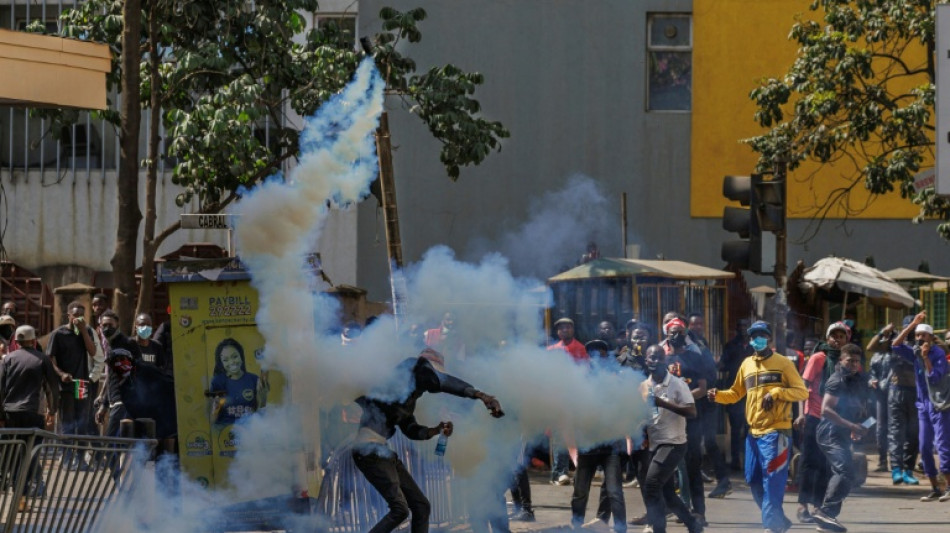
Violence feared as Kenya marks protest anniversary / Photo: Tony KARUMBA - AFP

 London
 10 °C
10 °C

 Manchester
 10 °C
10 °C
 Glasgow
 12 °C
12 °C
 Dublin
 10 °C
10 °C
 Belfast
10 °C
Belfast
10 °C
 Washington
 15 °C
15 °C
 Denver
21 °C
Denver
21 °C
 Atlanta
16 °C
Atlanta
16 °C
 Dallas
23 °C
Dallas
23 °C
 Houston Texas
25 °C
Houston Texas
25 °C
 New Orleans
23 °C
New Orleans
23 °C
 El Paso
22 °C
El Paso
22 °C
 Phoenix
33 °C
Phoenix
33 °C
 Los Angeles
23 °C
San Diego
22 °C
San Francisco
15 °C
Chicago
19 °C
Minneapolis
16 °C
Seattle
11 °C
Portland
12 °C
Salt Lake City
22 °C
Las Vegas
29 °C
Miami
28 °C
Jacksonville
24 °C
San Antonio
22 °C
Bermuda
25 °C
Nassau
16 °C
Iqaluit
-2 °C
Yellowknife
2 °C
Anchorage
8 °C
Fairbanks
0 °C
Barrow
1 °C
Calgary
8 °C
Edmonton
18 °C
Winnipeg
14 °C
Goose Bay
8 °C
Halifax
9 °C
Boston
12 °C
Ottawa
5 °C
Toronto
9 °C
Detroit
15 °C
Cleveland
13 °C
New York
17 °C
Baltimore
15 °C
Philadelphia
15 °C
Nuuk (Godthåb)
0 °C
Hong Kong
Los Angeles
23 °C
San Diego
22 °C
San Francisco
15 °C
Chicago
19 °C
Minneapolis
16 °C
Seattle
11 °C
Portland
12 °C
Salt Lake City
22 °C
Las Vegas
29 °C
Miami
28 °C
Jacksonville
24 °C
San Antonio
22 °C
Bermuda
25 °C
Nassau
16 °C
Iqaluit
-2 °C
Yellowknife
2 °C
Anchorage
8 °C
Fairbanks
0 °C
Barrow
1 °C
Calgary
8 °C
Edmonton
18 °C
Winnipeg
14 °C
Goose Bay
8 °C
Halifax
9 °C
Boston
12 °C
Ottawa
5 °C
Toronto
9 °C
Detroit
15 °C
Cleveland
13 °C
New York
17 °C
Baltimore
15 °C
Philadelphia
15 °C
Nuuk (Godthåb)
0 °C
Hong Kong
 30 °C
Singapore
30 °C
Singapore
 32 °C
Melbourne
29 °C
Canberra
32 °C
Melbourne
29 °C
Canberra
 21 °C
Adelaide
20 °C
Darwin
21 °C
Adelaide
20 °C
Darwin
 32 °C
Perth
20 °C
Fort Worth
24 °C
Honolulu
28 °C
Sydney
29 °C
Johannesburg
18 °C
Dubai
32 °C
Mumbai
32 °C
Zürich
13 °C
Tokyo
25 °C
Seoul
25 °C
Delhi
26 °C
Beijing
24 °C
Riyadh
26 °C
Prague
11 °C
Pennsylvania
11 °C
Valletta
24 °C
Manama
31 °C
Warsaw
10 °C
Stockholm
3 °C
32 °C
Perth
20 °C
Fort Worth
24 °C
Honolulu
28 °C
Sydney
29 °C
Johannesburg
18 °C
Dubai
32 °C
Mumbai
32 °C
Zürich
13 °C
Tokyo
25 °C
Seoul
25 °C
Delhi
26 °C
Beijing
24 °C
Riyadh
26 °C
Prague
11 °C
Pennsylvania
11 °C
Valletta
24 °C
Manama
31 °C
Warsaw
10 °C
Stockholm
3 °C
Kenya prepared for possible violence on the streets Thursday as police shut down large parts of the capital in a bid to block protests marking two years since a landmark Gen Z uprising.
Thousands of Kenyans protested in June 2024 against economic hardship and corruption, eventually storming parliament to force the cancellation of new taxes.
It was a watershed moment as young Kenyans demanded accountability without regard for traditional ethnic dividing lines, and June 25 has become an annual day of protest.
But it came at a price, with at least 127 people killed across the two years of protests, according to a police watchdog, as security forces shot people with near-total impunity.
Police were taking no chances on Thursday, with a slew of roadblocks shutting down traffic on key roads around Nairobi, and many schools and offices closed.
"The government should let people protest," said Beatrice, 26, walking to work in the central business district after public transport was blocked.
The business district was the focus of unrest in recent years, but was relatively calm early Thursday, with a heavy police presence.
"What I urge is that police be gentle on people, and people should be gentle on the police," said Beatrice, who only gave her first name.
President William Ruto said this week that Kenyans had a right to demonstrate, but warned against anyone "mobilised to destroy property or cause chaos".
Yet politicians have frequently deployed masses of hired "goons" -- armed men sent to attack opponents -- who are blamed for most of the looting and robberies during protests.
AFP saw scores of them operating alongside police during last year's protests, and they have recently been used to attack everything from opposition rallies to civil rights meetings in churches.
Ruto's former deputy Rigathi Gachagua, now a bitter rival, warned young Kenyans not to protest on Thursday, saying: "I plead with you: stay at home. The state has organised terror against Kenyans."
Near one roadblock in central Nairobi, 24-year-old motorbike-taxi driver Emmanuel said the early calm was deceptive.
"It's too early. We're warming up. We're tired of this economy. (Ruto) must go," he told AFP.
- 'Clearly unpopular' -
Ruto has long been associated with violence -- he was charged with crimes against humanity by the International Criminal Court for inciting attacks during mass election violence in 2007-08, a case that was dropped after alleged witness-intimidation.
He has since resurrected himself as a business-oriented leader and a favourite on the international scene, recently hosting French President Emmanuel Macron for a major African summit.
But his promises of economic transformation have failed to register for many Kenyans, who accuse him of a string of broken pledges, corruption scandals, and abductions targeting critics.
Ruto is "clearly very unpopular with many Kenyans, especially the Gen Z" youngsters, said political analyst Gabrielle Lynch.
She said he is "using security and intelligence services to make Kenyans worried about speaking out against the state".
But he has also attempted something of an olive branch, last week announcing that more than 1,100 victims of violence would receive compensation.
"No other administration in the past since post-independence Kenya has made payouts to victims of protests," said political analyst Javas Bigambo, praising Ruto's ambitious plans to revamp social housing, health insurance and infrastructure.
With elections due in August 2027, Ruto also has the advantage of a fractured opposition.
"His competitors are only criticising and not offering an alternative pathway," said Bigambo.
But many fear those elections will see politicians mobilising ever-larger number of goons to protect themselves and attack opponents.
"I'm worried about next year... We know from history that once you've mobilised those groups, you can't always control them afterwards," said Lynch.
Q.Vincent--PS