Exiled Tibetans elect government in vote condemned by China / Photo: Sanjay BAID - AFP/File

 London
 9 °C
9 °C

 Manchester
 11 °C
11 °C
 Glasgow
6 °C
Glasgow
6 °C
 Dublin
5 °C
Dublin
5 °C
 Belfast
6 °C
Belfast
6 °C
 Washington
6 °C
Washington
6 °C
 Denver
13 °C
Denver
13 °C
 Atlanta
9 °C
Atlanta
9 °C
 Dallas
14 °C
Dallas
14 °C
 Houston Texas
 17 °C
17 °C
 New Orleans
17 °C
New Orleans
17 °C
 El Paso
 18 °C
18 °C
 Phoenix
22 °C
Phoenix
22 °C
 Los Angeles
22 °C
San Diego
21 °C
San Francisco
14 °C
Chicago
11 °C
Minneapolis
11 °C
Seattle
9 °C
Portland
11 °C
Salt Lake City
13 °C
Las Vegas
19 °C
Miami
26 °C
Jacksonville
18 °C
San Antonio
15 °C
Bermuda
26 °C
Nassau
8 °C
Iqaluit
-5 °C
Yellowknife
-3 °C
Anchorage
1 °C
Fairbanks
-3 °C
Barrow
-2 °C
Calgary
3 °C
Edmonton
7 °C
Winnipeg
3 °C
Goose Bay
9 °C
Halifax
2 °C
Boston
5 °C
Ottawa
8 °C
Toronto
10 °C
Detroit
9 °C
Cleveland
8 °C
New York
10 °C
Baltimore
6 °C
Philadelphia
7 °C
Nuuk (Godthåb)
-2 °C
Hong Kong
Los Angeles
22 °C
San Diego
21 °C
San Francisco
14 °C
Chicago
11 °C
Minneapolis
11 °C
Seattle
9 °C
Portland
11 °C
Salt Lake City
13 °C
Las Vegas
19 °C
Miami
26 °C
Jacksonville
18 °C
San Antonio
15 °C
Bermuda
26 °C
Nassau
8 °C
Iqaluit
-5 °C
Yellowknife
-3 °C
Anchorage
1 °C
Fairbanks
-3 °C
Barrow
-2 °C
Calgary
3 °C
Edmonton
7 °C
Winnipeg
3 °C
Goose Bay
9 °C
Halifax
2 °C
Boston
5 °C
Ottawa
8 °C
Toronto
10 °C
Detroit
9 °C
Cleveland
8 °C
New York
10 °C
Baltimore
6 °C
Philadelphia
7 °C
Nuuk (Godthåb)
-2 °C
Hong Kong
 31 °C
Singapore
32 °C
Melbourne
24 °C
Canberra
31 °C
Singapore
32 °C
Melbourne
24 °C
Canberra
 22 °C
Adelaide
27 °C
Darwin
22 °C
Adelaide
27 °C
Darwin
 32 °C
Perth
22 °C
Fort Worth
13 °C
Honolulu
25 °C
Sydney
22 °C
Johannesburg
19 °C
Dubai
35 °C
Mumbai
35 °C
Zürich
10 °C
Tokyo
26 °C
Seoul
17 °C
Delhi
28 °C
Beijing
19 °C
Riyadh
31 °C
Prague
6 °C
Pennsylvania
4 °C
Valletta
23 °C
Manama
33 °C
Warsaw
7 °C
Stockholm
3 °C
32 °C
Perth
22 °C
Fort Worth
13 °C
Honolulu
25 °C
Sydney
22 °C
Johannesburg
19 °C
Dubai
35 °C
Mumbai
35 °C
Zürich
10 °C
Tokyo
26 °C
Seoul
17 °C
Delhi
28 °C
Beijing
19 °C
Riyadh
31 °C
Prague
6 °C
Pennsylvania
4 °C
Valletta
23 °C
Manama
33 °C
Warsaw
7 °C
Stockholm
3 °C
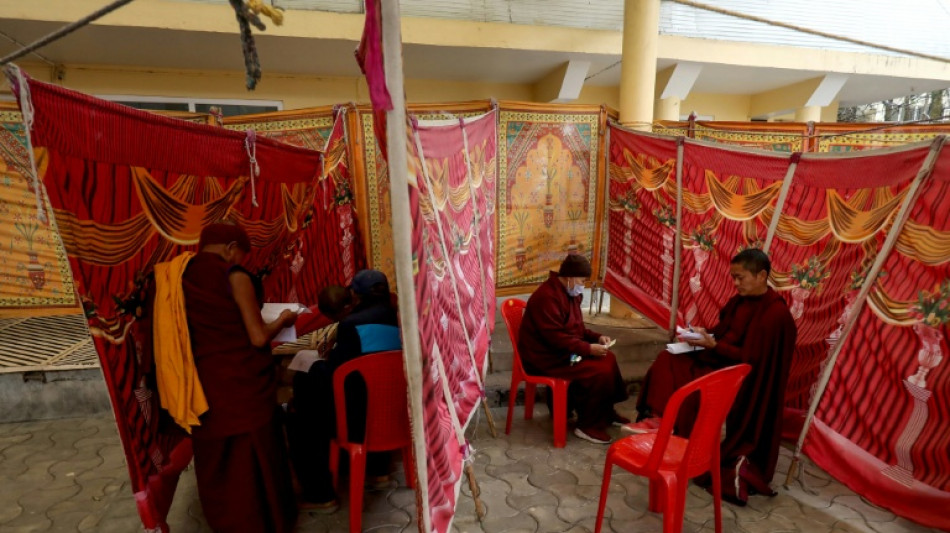
Tibetans outside Chinese control vote on Sunday for a government-in-exile, an election of heightened significance as they brace for an inevitable, eventual, future without their revered spiritual leader, the Dalai Lama.
The India-based Central Tibetan Administration (CTA) -- condemned by China as "nothing but a separatist political group" -- is a key institution for the exiles, especially after the Dalai Lama handed over political power in 2011.
"Our votes matter," said Tenzin Tsering, 19, a first-time voter, waiting to cast his ballot to push for greater youth representation.
"We need voices that reflect where our community is going, not just where it has been", he said, speaking in Bylakuppe in India's southern state of Karnataka, one of the largest Tibetan communities outside the Himalayan plateau.
Polling is due to take place in 27 countries -- but not China.
The 91,000 registered voters including Buddhist monks in the high Himalayas, political exiles in South Asia's megacities and refugees in Australia, Europe and North America.
The 90-year-old Dalai Lama, based in India since fleeing the Tibetan capital Lhasa after Chinese troops crushed an uprising in 1959, insists he has many more years to live.
But supporters of the Nobel Peace Prize laureate are acutely aware that self-declared atheist and Communist China said last year that it must approve the Buddhist leader's eventual successor.
The Dalai Lama says only his India-based office has that right.
Tibetan Buddhists believe he is the 14th reincarnation of a spiritual leader first born in 1391.
The five-year parliament, which sits twice a year, has 45 members from across the world: 30 representing three traditional provinces, 10 representing five religious traditions, and five representing the diaspora.
Headquartered in Dharamsala in northern India, it functions as a representative body for an estimated 150,000 Tibetans living in exile worldwide.
The government's "sikyong", or leader, Penpa Tsering, was elected for a second term on February 1, after taking 61 percent in the preliminary round -- a high enough threshold to win outright.
Tsering, like the government, does not seek full independence for Tibet, in line with the Dalai Lama's long-standing "Middle Way" policy seeking autonomy.
R.Fournier--PS