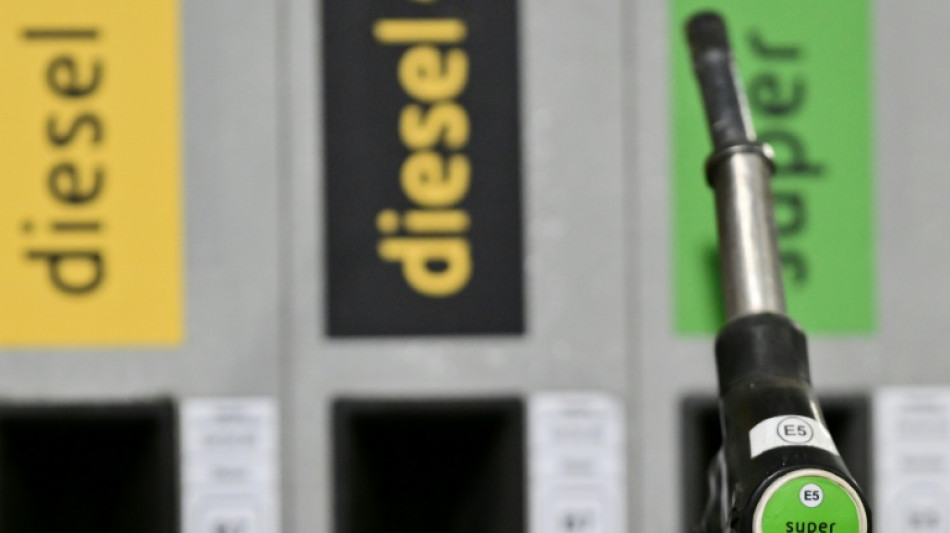
Oil prices surge as supply fears offset IEA's record stockpile release / Photo: Stefano RELLANDINI - AFP

 London
 12 °C
12 °C

 Manchester
 7 °C
7 °C
 Glasgow
 11 °C
11 °C
 Dublin
 11 °C
11 °C
 Belfast
8 °C
Belfast
8 °C
 Washington
 20 °C
20 °C
 Denver
21 °C
Denver
21 °C
 Atlanta
24 °C
Atlanta
24 °C
 Dallas
27 °C
Dallas
27 °C
 Houston Texas
28 °C
Houston Texas
28 °C
 New Orleans
25 °C
New Orleans
25 °C
 El Paso
27 °C
El Paso
27 °C
 Phoenix
27 °C
Phoenix
27 °C
 Los Angeles
 18 °C
San Diego
22 °C
San Francisco
16 °C
Chicago
20 °C
Minneapolis
21 °C
Seattle
12 °C
Portland
18 °C
San Diego
22 °C
San Francisco
16 °C
Chicago
20 °C
Minneapolis
21 °C
Seattle
12 °C
Portland
 14 °C
Salt Lake City
14 °C
Salt Lake City
 18 °C
Las Vegas
24 °C
Miami
26 °C
Jacksonville
24 °C
San Antonio
28 °C
Bermuda
25 °C
Nassau
18 °C
Iqaluit
-9 °C
Yellowknife
-3 °C
Anchorage
-3 °C
Fairbanks
-6 °C
Barrow
18 °C
Las Vegas
24 °C
Miami
26 °C
Jacksonville
24 °C
San Antonio
28 °C
Bermuda
25 °C
Nassau
18 °C
Iqaluit
-9 °C
Yellowknife
-3 °C
Anchorage
-3 °C
Fairbanks
-6 °C
Barrow
 -2 °C
Calgary
15 °C
Edmonton
23 °C
Winnipeg
16 °C
Goose Bay
14 °C
Halifax
15 °C
Boston
17 °C
Ottawa
15 °C
Toronto
17 °C
Detroit
19 °C
Cleveland
18 °C
New York
19 °C
Baltimore
20 °C
Philadelphia
20 °C
Nuuk (Godthåb)
-6 °C
Hong Kong
25 °C
Singapore
28 °C
Melbourne
26 °C
Canberra
15 °C
Adelaide
22 °C
Darwin
28 °C
Perth
16 °C
Fort Worth
27 °C
Honolulu
23 °C
Sydney
18 °C
Johannesburg
21 °C
Dubai
33 °C
Mumbai
32 °C
Zürich
9 °C
Tokyo
16 °C
Seoul
6 °C
Delhi
24 °C
Beijing
11 °C
Riyadh
31 °C
Prague
9 °C
Pennsylvania
18 °C
Valletta
20 °C
Manama
32 °C
Warsaw
10 °C
Stockholm
12 °C
-2 °C
Calgary
15 °C
Edmonton
23 °C
Winnipeg
16 °C
Goose Bay
14 °C
Halifax
15 °C
Boston
17 °C
Ottawa
15 °C
Toronto
17 °C
Detroit
19 °C
Cleveland
18 °C
New York
19 °C
Baltimore
20 °C
Philadelphia
20 °C
Nuuk (Godthåb)
-6 °C
Hong Kong
25 °C
Singapore
28 °C
Melbourne
26 °C
Canberra
15 °C
Adelaide
22 °C
Darwin
28 °C
Perth
16 °C
Fort Worth
27 °C
Honolulu
23 °C
Sydney
18 °C
Johannesburg
21 °C
Dubai
33 °C
Mumbai
32 °C
Zürich
9 °C
Tokyo
16 °C
Seoul
6 °C
Delhi
24 °C
Beijing
11 °C
Riyadh
31 °C
Prague
9 °C
Pennsylvania
18 °C
Valletta
20 °C
Manama
32 °C
Warsaw
10 °C
Stockholm
12 °C
Oil prices soared Thursday and stocks sank as Iran struck two tankers in Iraq and threatened to bring down the global economy, overshadowing a record release of strategic crude by the International Energy Agency.
As the US-Israel strikes on the Islamic republic approached their third week, the conflict showed no signs of letting up with Tehran responding with more retaliatory attacks across the Gulf.
The IEA said Wednesday that its members had agreed to unlock 400 million barrels of oil from their reserves -- their largest release ever -- with 172 million coming from the United States.
However, the move was unable to overcome fears about the choking of energy supplies from the Middle East, with the Strait of Hormuz -- through which a fifth of global crude passes -- effectively shut down.
In a sign that shipping across the region was in danger, two tankers in Iraqi waters were struck. Baghdad had already said it was cutting output because of the crisis, with Kuwait and kingpin Saudi Arabia following suit.
Meanwhile, Iran said it was ready for a long war of attrition that would "destroy" the world economy, after firing on two commercial ships and threatening any vessels from the United States or its allies.
The Revolutionary Guards warned Wednesday they would strike "economic centres and banks" linked to US and Israeli interests.
The United States and Israel "must consider the possibility that they will be engaged in a long-term war of attrition that will destroy the entire American economy and the world economy", Ali Fadavi, an adviser to the Guards' commander-in-chief, told state television.
Analysts warn that a prolonged disruption to shipping through the strait -- which also carries roughly a third of the fertiliser used in global food production -- would deliver a severe economic shock, particularly in Asia and Europe.
Among those badly hit are airlines, with many having to rethink flights through the Middle East, while the rising cost of fuel hits their bottom line. Air New Zealand said Thursday it would cut 1,100 flights over the next two months.
The surge in oil prices has fanned fresh fears about another spike in inflation and warnings that central banks might have to hike interest rates again, having been contemplating cuts just last month.
That has weighed on equities, which resumed their retreat Thursday.
Tokyo, Hong Kong, Sydney, Seoul, Wellington, Singapore, Taipei, Manila, Jakarta and Shanghai were all down.
Both main crude contracts jumped more than seven percent and back towards $100 Thursday, extending the previous day's four percent spike that broke a brief period of relative calm on markets.
They had rocketed as much as 30 percent Monday to a peak of nearly $120.
"For traders, this is not a contradiction but a familiar pattern," said Stephen Innes at SPI Asset Management, referring to the oil price rise after the IEA move.
"When the geopolitical fire alarm is still ringing around the Strait of Hormuz, dumping barrels from emergency stockpiles is less a solution than a symbolic gesture.
"It might dampen volatility for a few hours but it cannot change the geometry of risk when the world’s most important shipping artery is under threat.
"In trading desk language, the IEA release is the equivalent of pointing a garden hose at a refinery blaze."
Saxo Markets' Neil Wilson pointed out that the move had already largely been priced in by investors, helping oil retreat below $100 earlier in the week, while Trump's remarks on ending the war early had also played a role in keeping prices down.
He added that the war had already caused the loss of around 200 million barrels.
And, he said, "reserves are stockpiles sitting as existing inventory -- the market is more concerned about flows. Moving barrels from point A to point B is not the same as producing new oil".
Observers now warn that with no end in sight to the hostilities, the $90-$100 a barrel range could be the new normal for a while.
Still, Trump reiterated his insistence that the strikes had already practically defeated Iran.
"They are pretty much at the end of the line," he told reporters in Washington, after delivering a speech to supporters in which he declared: "We've won... we won -- in the first hour it was over."
Israel's military, however, signalled the campaign was far from finished, and that it still had "a broad bank of targets."
- Key figures at around 0230 GMT -
West Texas Intermediate: UP 7.2 percent at $93.54 per barrel
Brent North Sea Crude: UP 7.2 percent at $98.62 per barrel
Tokyo - Nikkei 225: DOWN 1.5 percent at 54,177.15 (break)
Hong Kong - Hang Seng Index: DOWN 1.2 percent at 25,587.33
Shanghai - Composite: DOWN 0.2 percent at 4,126.63
Euro/dollar: DOWN at $1.1543 from $1.1574 on Wednesday
Pound/dollar: DOWN at $1.3381 from $1.3419
Dollar/yen: UP at 158.99 yen from 158.92 yen
Euro/pound: UP at 86.27 pence from 86.25 pence
New York - Dow: DOWN 0.6 percent at 47,417.27 (close)
London - FTSE 100: DOWN 0.6 percent at 10,353.77 (close)
Q.Vincent--PS