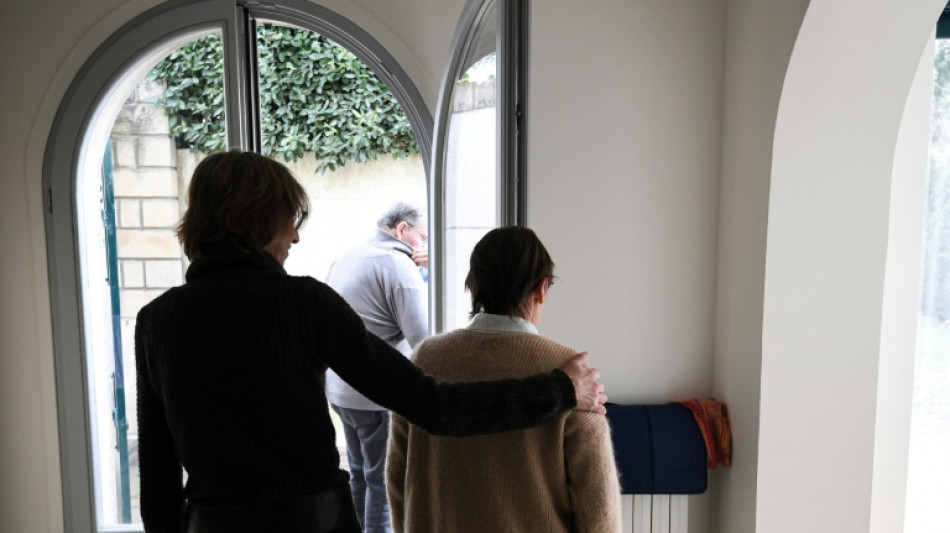
Much-hyped Alzheimer's drugs do not help patients, review finds / Photo: ALAIN JOCARD - AFP/File

 London
 17 °C
17 °C

 Manchester
11 °C
Manchester
11 °C
 Glasgow
 9 °C
9 °C
 Dublin
 13 °C
13 °C
 Belfast
 12 °C
12 °C
 Washington
 23 °C
23 °C
 Denver
23 °C
Denver
23 °C
 Atlanta
24 °C
Atlanta
24 °C
 Dallas
 33 °C
33 °C
 Houston Texas
33 °C
Houston Texas
33 °C
 New Orleans
29 °C
New Orleans
29 °C
 El Paso
28 °C
El Paso
28 °C
 Phoenix
34 °C
Phoenix
34 °C
 Los Angeles
28 °C
San Diego
27 °C
San Francisco
21 °C
Chicago
18 °C
Minneapolis
21 °C
Seattle
Los Angeles
28 °C
San Diego
27 °C
San Francisco
21 °C
Chicago
18 °C
Minneapolis
21 °C
Seattle
 13 °C
Portland
19 °C
Salt Lake City
29 °C
Las Vegas
36 °C
Miami
30 °C
Jacksonville
24 °C
San Antonio
13 °C
Portland
19 °C
Salt Lake City
29 °C
Las Vegas
36 °C
Miami
30 °C
Jacksonville
24 °C
San Antonio
 36 °C
Bermuda
27 °C
Nassau
19 °C
Iqaluit
3 °C
Yellowknife
12 °C
Anchorage
9 °C
Fairbanks
12 °C
Barrow
1 °C
Calgary
24 °C
Edmonton
26 °C
Winnipeg
18 °C
Goose Bay
22 °C
Halifax
16 °C
Boston
18 °C
Ottawa
23 °C
Toronto
20 °C
Detroit
19 °C
Cleveland
19 °C
New York
21 °C
Baltimore
23 °C
Philadelphia
22 °C
Nuuk (Godthåb)
3 °C
Hong Kong
26 °C
Singapore
28 °C
Melbourne
28 °C
Canberra
13 °C
Adelaide
16 °C
Darwin
24 °C
Perth
13 °C
Fort Worth
34 °C
Honolulu
28 °C
Sydney
17 °C
Johannesburg
14 °C
Dubai
32 °C
Mumbai
29 °C
Zürich
13 °C
Tokyo
20 °C
Seoul
19 °C
Delhi
24 °C
Beijing
18 °C
Riyadh
33 °C
Prague
12 °C
Pennsylvania
22 °C
Valletta
24 °C
Manama
32 °C
Warsaw
13 °C
Stockholm
11 °C
36 °C
Bermuda
27 °C
Nassau
19 °C
Iqaluit
3 °C
Yellowknife
12 °C
Anchorage
9 °C
Fairbanks
12 °C
Barrow
1 °C
Calgary
24 °C
Edmonton
26 °C
Winnipeg
18 °C
Goose Bay
22 °C
Halifax
16 °C
Boston
18 °C
Ottawa
23 °C
Toronto
20 °C
Detroit
19 °C
Cleveland
19 °C
New York
21 °C
Baltimore
23 °C
Philadelphia
22 °C
Nuuk (Godthåb)
3 °C
Hong Kong
26 °C
Singapore
28 °C
Melbourne
28 °C
Canberra
13 °C
Adelaide
16 °C
Darwin
24 °C
Perth
13 °C
Fort Worth
34 °C
Honolulu
28 °C
Sydney
17 °C
Johannesburg
14 °C
Dubai
32 °C
Mumbai
29 °C
Zürich
13 °C
Tokyo
20 °C
Seoul
19 °C
Delhi
24 °C
Beijing
18 °C
Riyadh
33 °C
Prague
12 °C
Pennsylvania
22 °C
Valletta
24 °C
Manama
32 °C
Warsaw
13 °C
Stockholm
11 °C
Drugs once hailed as a breakthrough in the fight against Alzheimer's disease do not meaningfully help patients, a major review found Thursday, however some experts criticised the research.
The review by the Cochrane organisation -- which is considered the gold standard for analysing existing evidence -- looked at drugs that target a plaque called amyloids which builds up in the brains of Alzheimer's patients.
Researchers have long sought a way to eliminate this plaque, believing it could be the cause of the most common form of dementia which affects millions of elderly people every year.
After decades of costly yet unsuccessful research, two anti-amyloid drugs called lecanemab and donanemab were initially hailed as gamechangers that finally offered a way to slow the progress of the debilitating disease.
Both drugs were approved by the United States and European Union over the last few years.
However concerns about their effectiveness, cost and side effects including an increased risk of brain swelling and bleeding have since prompted caution. State-run health services in the UK and France have refused to cover the drugs.
The new Cochrane review combined data from 17 clinical trials that included a total of more than 20,000 people with mild cognitive impairment or early dementia.
The trials, which took place over roughly 18 months, studied seven different anti-amyloid drugs.
Only one of the trials examined donanemab -- sold under the name Kisunla by US pharma giant Eli Lilly -- while one studied lecanemab, sold as Leqembi by Biogen and Eisai.
While early trials suggested these drugs made a statistically significant difference, this did not translate into "something clinically meaningful for patients," lead study author Francesco Nonino of Italy's IRCCS institute told a press conference.
Brain scans showed that the drugs successfully removed amyloids, the researchers emphasised.
This means "the idea that removing amyloids will benefit patients was refuted by our results," said study co-author Edo Richard of Radboud University Medical Centre in the Netherlands.
- 'Not delivering on promise' -
Richard, who has previously expressed scepticism about anti-amyloid drugs, said he hopes efforts targeting other mechanisms that potentially cause Alzheimer's lead to more effective drugs in the future.
British biologist John Hardy, who first developed the amyloid hypothesis in the 1990s, criticised the review for lumping together data about lecanemab and donanemab along with drugs that are known to be ineffective, therefore dragging down the overall average.
"This is a silly paper which should not have been published," Hardy told AFP, disclosing that he has consulted for Eli Lilly, Biogen and Eisai.
In response to such questions, Richard said that while the drugs included in the study may work in different ways, they all have the same target: amyloid beta proteins.
Australian neuroscientist Bryce Vissel, who was not involved in the research, said it "does not prove amyloid has no role in Alzheimer's, and it does not rule out future amyloid-directed therapies that may yet help patients".
"But it does show that the current generation of anti-amyloid drugs is not delivering the promise that has surrounded it."
G.Durand--PS