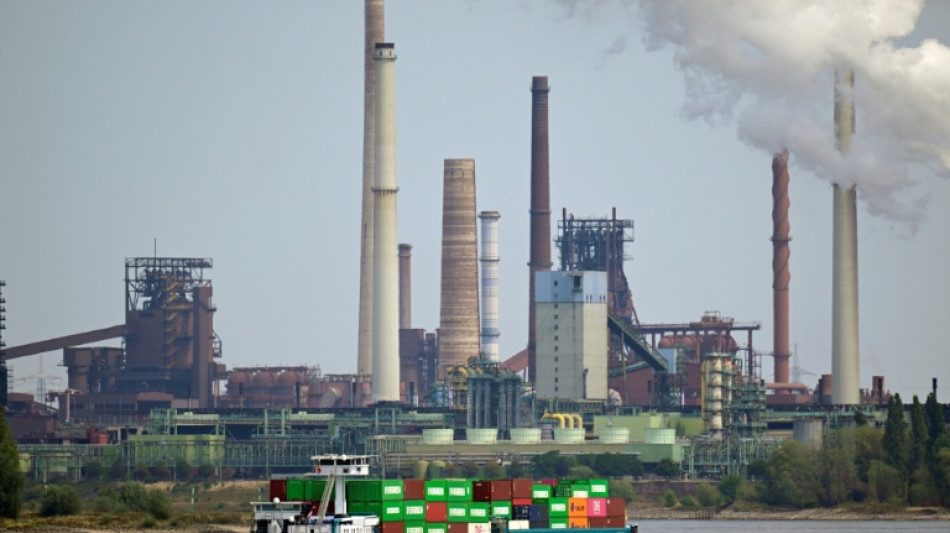
German growth prospects brighten as economy defies Mideast turmoil / Photo: Ina FASSBENDER - AFP/File

 London
 21 °C
21 °C

 Manchester
18 °C
Manchester
18 °C
 Glasgow
18 °C
Glasgow
18 °C
 Dublin
18 °C
Dublin
18 °C
 Belfast
16 °C
Belfast
16 °C
 Washington
23 °C
Washington
23 °C
 Denver
 18 °C
18 °C
 Atlanta
 25 °C
25 °C
 Dallas
26 °C
Dallas
26 °C
 Houston Texas
29 °C
Houston Texas
29 °C
 New Orleans
26 °C
New Orleans
26 °C
 El Paso
 27 °C
27 °C
 Phoenix
31 °C
Phoenix
31 °C
 Los Angeles
19 °C
San Diego
19 °C
San Francisco
16 °C
Chicago
28 °C
Minneapolis
23 °C
Seattle
13 °C
Portland
13 °C
Salt Lake City
17 °C
Las Vegas
27 °C
Miami
26 °C
Jacksonville
26 °C
San Antonio
27 °C
Bermuda
27 °C
Nassau
Los Angeles
19 °C
San Diego
19 °C
San Francisco
16 °C
Chicago
28 °C
Minneapolis
23 °C
Seattle
13 °C
Portland
13 °C
Salt Lake City
17 °C
Las Vegas
27 °C
Miami
26 °C
Jacksonville
26 °C
San Antonio
27 °C
Bermuda
27 °C
Nassau
 21 °C
Iqaluit
7 °C
Yellowknife
16 °C
Anchorage
8 °C
Fairbanks
2 °C
Barrow
1 °C
Calgary
14 °C
Edmonton
23 °C
Winnipeg
16 °C
Goose Bay
21 °C
Halifax
18 °C
Boston
18 °C
Ottawa
20 °C
Toronto
20 °C
Detroit
22 °C
Cleveland
24 °C
New York
21 °C
Baltimore
23 °C
Philadelphia
21 °C
Nuuk (Godthåb)
21 °C
Iqaluit
7 °C
Yellowknife
16 °C
Anchorage
8 °C
Fairbanks
2 °C
Barrow
1 °C
Calgary
14 °C
Edmonton
23 °C
Winnipeg
16 °C
Goose Bay
21 °C
Halifax
18 °C
Boston
18 °C
Ottawa
20 °C
Toronto
20 °C
Detroit
22 °C
Cleveland
24 °C
New York
21 °C
Baltimore
23 °C
Philadelphia
21 °C
Nuuk (Godthåb)
 5 °C
Hong Kong
30 °C
Singapore
5 °C
Hong Kong
30 °C
Singapore
 33 °C
Melbourne
27 °C
Canberra
11 °C
Adelaide
15 °C
Darwin
33 °C
Melbourne
27 °C
Canberra
11 °C
Adelaide
15 °C
Darwin
 31 °C
Perth
18 °C
Fort Worth
26 °C
Honolulu
26 °C
Sydney
21 °C
Johannesburg
20 °C
Dubai
41 °C
Mumbai
30 °C
Zürich
21 °C
Tokyo
26 °C
Seoul
31 °C
Delhi
34 °C
Beijing
32 °C
Riyadh
39 °C
Prague
20 °C
Pennsylvania
21 °C
Valletta
31 °C
Manama
38 °C
Warsaw
31 °C
Perth
18 °C
Fort Worth
26 °C
Honolulu
26 °C
Sydney
21 °C
Johannesburg
20 °C
Dubai
41 °C
Mumbai
30 °C
Zürich
21 °C
Tokyo
26 °C
Seoul
31 °C
Delhi
34 °C
Beijing
32 °C
Riyadh
39 °C
Prague
20 °C
Pennsylvania
21 °C
Valletta
31 °C
Manama
38 °C
Warsaw
 21 °C
Stockholm
15 °C
21 °C
Stockholm
15 °C
German growth this year is set to come in stronger than previously estimated, leading research institutes said Thursday, as Europe's biggest economy withstands the fallout from the Middle East war.
The surge in energy costs unleashed by the conflict had been expected to deal a hefty blow to Germany, putting the brakes on an economic rebound driven by higher public spending.
But the turmoil has had less of an impact than feared, with Germany's energy supplies more diversified than in the past and its companies weathering the shock better than rivals, particularly in Asia.
The Ifo institute now expects growth of 1.4 percent for 2026, up 0.6 percentage points from its forecast in June.
The Kiel Institute and RWI-Leibniz Institute for Economic Research have both raised their full-year forecasts to 1.3 percent, up 0.5 percentage points.
"Significant impetus from abroad and increased spending on infrastructure, climate and defence in Germany are preventing a more severe economic slowdown due to the energy price shock and low water levels in rivers," said Timo Wollmershaeuser, head of forecasts at Ifo.
"There are rays of hope, especially for the crisis-stricken industry sector," he said.
Historically low water levels on major rivers in Germany this summer have also weighed on industries, such as chemicals and steel-making, that transport goods by boat.
Growth rates in the first half of the year have come in better than expected while a string of recent indicators, from factory output to exports and business confidence, have been ticking up.
After several years of stagnation, hopes had been high the eurozone's traditional growth engine would rebound this year thanks to a spending blitz unleashed by Chancellor Friedrich Merz.
This fiscal stimulus, along with healthy demand for exports, were helping to boost economic expectations while the "dampening effects" of the energy shock were weaker than expected, the Ifo institute said.
Still, the Kiel Institute cautioned that "the recovery remains fragile".
"The war in Iran continues to pose downside risks, while the additional fiscal stimulus will fade in the years ahead," it said.
Economists also warn that deep-rooted problems such as an ageing population and complex bureaucracy will continue to hold the economy back.
P.Roux--PS