US, Canada resume talks to finalize trade deal as details emerge / Photo: Mandel NGAN - AFP

 London
 22 °C
22 °C

 Manchester
14 °C
Manchester
14 °C
 Glasgow
15 °C
Glasgow
15 °C
 Dublin
16 °C
Dublin
16 °C
 Belfast
 17 °C
17 °C
 Washington
29 °C
Washington
29 °C
 Denver
 27 °C
27 °C
 Atlanta
32 °C
Atlanta
32 °C
 Dallas
34 °C
Dallas
34 °C
 Houston Texas
 33 °C
33 °C
 New Orleans
32 °C
New Orleans
32 °C
 El Paso
31 °C
El Paso
31 °C
 Phoenix
33 °C
Phoenix
33 °C
 Los Angeles
25 °C
San Diego
Los Angeles
25 °C
San Diego
 25 °C
San Francisco
15 °C
Chicago
25 °C
Minneapolis
23 °C
Seattle
19 °C
Portland
20 °C
Salt Lake City
32 °C
Las Vegas
35 °C
Miami
34 °C
Jacksonville
33 °C
San Antonio
32 °C
Bermuda
29 °C
Nassau
28 °C
Iqaluit
10 °C
Yellowknife
13 °C
Anchorage
11 °C
Fairbanks
13 °C
Barrow
5 °C
Calgary
19 °C
Edmonton
25 °C
Winnipeg
19 °C
Goose Bay
20 °C
Halifax
29 °C
Boston
29 °C
Ottawa
22 °C
Toronto
23 °C
Detroit
24 °C
Cleveland
23 °C
New York
30 °C
Baltimore
28 °C
Philadelphia
24 °C
Nuuk (Godthåb)
11 °C
Hong Kong
25 °C
San Francisco
15 °C
Chicago
25 °C
Minneapolis
23 °C
Seattle
19 °C
Portland
20 °C
Salt Lake City
32 °C
Las Vegas
35 °C
Miami
34 °C
Jacksonville
33 °C
San Antonio
32 °C
Bermuda
29 °C
Nassau
28 °C
Iqaluit
10 °C
Yellowknife
13 °C
Anchorage
11 °C
Fairbanks
13 °C
Barrow
5 °C
Calgary
19 °C
Edmonton
25 °C
Winnipeg
19 °C
Goose Bay
20 °C
Halifax
29 °C
Boston
29 °C
Ottawa
22 °C
Toronto
23 °C
Detroit
24 °C
Cleveland
23 °C
New York
30 °C
Baltimore
28 °C
Philadelphia
24 °C
Nuuk (Godthåb)
11 °C
Hong Kong
 26 °C
Singapore
28 °C
Melbourne
32 °C
Canberra
11 °C
Adelaide
26 °C
Singapore
28 °C
Melbourne
32 °C
Canberra
11 °C
Adelaide
 11 °C
Darwin
11 °C
Darwin
 22 °C
Perth
22 °C
Perth
 12 °C
Fort Worth
35 °C
Honolulu
23 °C
Sydney
16 °C
Johannesburg
20 °C
Dubai
35 °C
Mumbai
29 °C
Zürich
27 °C
Tokyo
27 °C
Seoul
24 °C
Delhi
32 °C
Beijing
26 °C
Riyadh
39 °C
Prague
27 °C
Pennsylvania
25 °C
Valletta
32 °C
Manama
36 °C
Warsaw
24 °C
Stockholm
20 °C
12 °C
Fort Worth
35 °C
Honolulu
23 °C
Sydney
16 °C
Johannesburg
20 °C
Dubai
35 °C
Mumbai
29 °C
Zürich
27 °C
Tokyo
27 °C
Seoul
24 °C
Delhi
32 °C
Beijing
26 °C
Riyadh
39 °C
Prague
27 °C
Pennsylvania
25 °C
Valletta
32 °C
Manama
36 °C
Warsaw
24 °C
Stockholm
20 °C
US and Canadian negotiators resumed trade talks shortly after midday Thursday, as both countries push to finalize a deal to avert new tariffs threatened by President Donald Trump.
The talks in Washington came after Prime Minister Mark Carney briefed Canada's regional leaders on the outlines of a pact to stabilize bilateral trade.
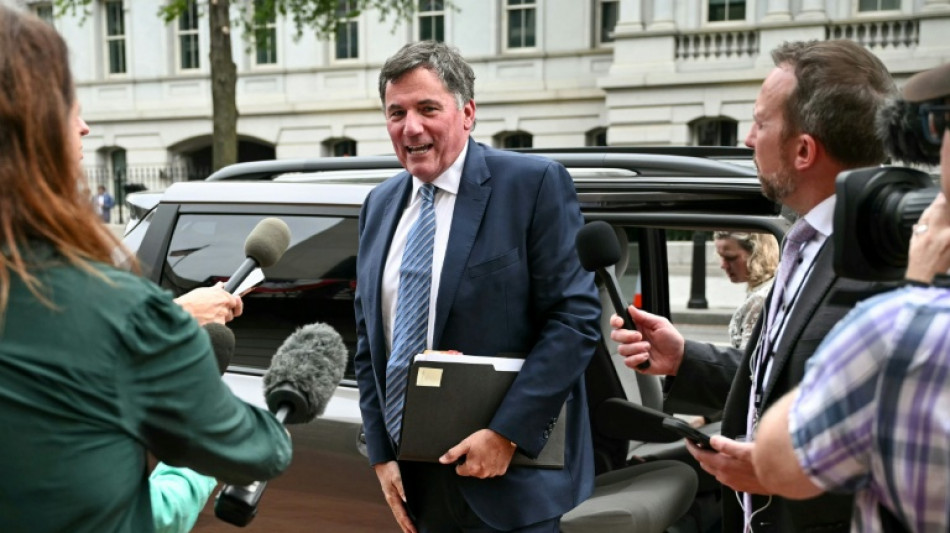
Canada's minister in charge of bilateral trade with its southern neighbor, Dominic LeBlanc, was in Washington Thursday to meet US Trade Representative Jamieson Greer.
"I am always looking forward to be back at work," he told reporters without going into details about the trade negotiations.
On Wednesday, both sides said they had moved close to a final agreement, a deal that could ease tensions following months of acrimony triggered by Trump's punishing tariffs.
A new spate of 50-percent US tariffs were set to take effect on Canadian imports on Wednesday, but Trump said the day before that he was delaying enactment for 72 hours as a deal looked close.
Details of the prospective agreement remain unclear, but Carney on Wednesday updated the leaders of Canada's provinces and territories on the negotiations.
Nova Scotia Premier Tim Houston told reporters Carney made specific requests that the United States wanted implemented by Canadian provinces.
Those include restocking US wine and liquor, which several provinces removed in retaliation for Trump's tariffs on Canadian autos, steel, aluminum and lumber.
"The prime minister has asked us, as premiers, as provinces, to return the US alcohol to the shelves," Houston said.
"It's been an irritant... that has kind of really bothered the United States," he added.
The leader of the Atlantic coast province noted that even if US alcohol returned to Canadian stores, there is no guarantee people will buy it, citing deep-seated frustration over Trump's treatment of Canada, including his repeated annexation threats.
Beyond the provisions in any trade deal, there's "the emotional impact of what Canadians have experienced," Houston said.
"It has been emotionally draining and it has had an emotional impact that will last a long time."
Carney also asked provinces to ensure they remove any language in procurement policies that "specifically excludes the United States," Houston said.
Provinces could still favor Canadian suppliers, but cannot have direct language that precludes a US supplier from a project.
Houston declined to discuss any proposed US tariff reductions, but broadly said the agreement appeared to be "the best possible outcome we can hope for in dealing with this administration."
It also preserves "the core elements of supply management," he said, referring to the Canadian policy that regulates dairy and poultry supply, imposing prohibitive penalties on US suppliers above certain rates.
As part of the negotiations, the US likely has a range of demands of Canada's federal government, beyond the list of actions Carney requested from Canadian regional premiers.
According to Canadian media reports, those include commitments on defense procurement and critical mineral supply.
M.Michel--PS