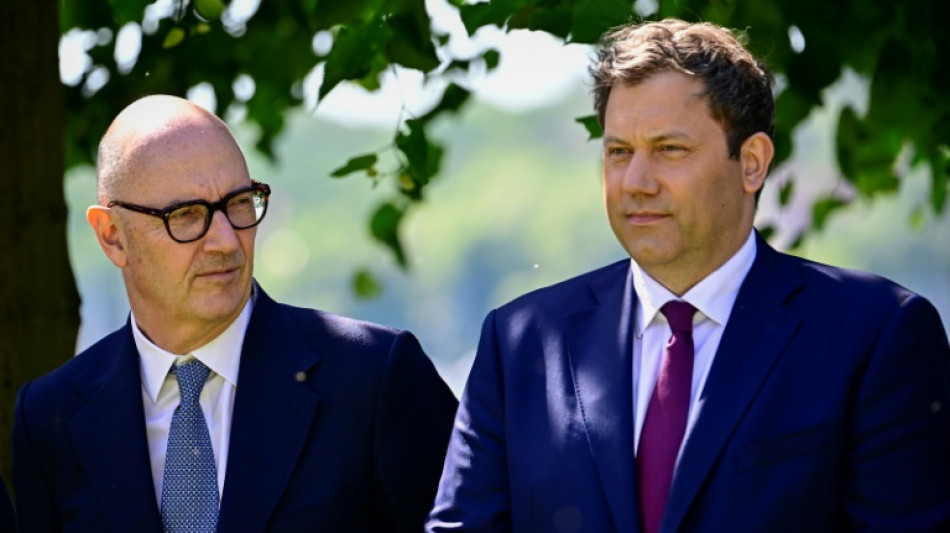
Top EU economies vow to speed up financial integration / Photo: Tobias SCHWARZ - AFP

 London
 12 °C
12 °C
 Manchester
 13 °C
13 °C
 Glasgow
15 °C
Glasgow
15 °C
 Dublin
 11 °C
11 °C
 Belfast
12 °C
Belfast
12 °C
 Washington
25 °C
Washington
25 °C
 Denver
 25 °C
25 °C
 Atlanta
27 °C
Atlanta
27 °C
 Dallas
34 °C
Dallas
34 °C
 Houston Texas
31 °C
Houston Texas
31 °C
 New Orleans
 29 °C
29 °C
 El Paso
32 °C
El Paso
32 °C
 Phoenix
42 °C
Phoenix
42 °C
 Los Angeles
32 °C
San Diego
32 °C
San Francisco
24 °C
Chicago
28 °C
Minneapolis
26 °C
Seattle
Los Angeles
32 °C
San Diego
32 °C
San Francisco
24 °C
Chicago
28 °C
Minneapolis
26 °C
Seattle
 22 °C
Portland
27 °C
Salt Lake City
26 °C
Las Vegas
37 °C
Miami
29 °C
Jacksonville
22 °C
Portland
27 °C
Salt Lake City
26 °C
Las Vegas
37 °C
Miami
29 °C
Jacksonville
 27 °C
San Antonio
35 °C
Bermuda
25 °C
Nassau
22 °C
Iqaluit
5 °C
Yellowknife
27 °C
San Antonio
35 °C
Bermuda
25 °C
Nassau
22 °C
Iqaluit
5 °C
Yellowknife
 16 °C
Anchorage
13 °C
Fairbanks
12 °C
Barrow
2 °C
Calgary
16 °C
Anchorage
13 °C
Fairbanks
12 °C
Barrow
2 °C
Calgary
 21 °C
Edmonton
27 °C
Winnipeg
17 °C
Goose Bay
17 °C
Halifax
18 °C
Boston
20 °C
Ottawa
18 °C
Toronto
21 °C
Detroit
23 °C
Cleveland
24 °C
New York
24 °C
Baltimore
24 °C
Philadelphia
22 °C
Nuuk (Godthåb)
4 °C
Hong Kong
29 °C
Singapore
29 °C
Melbourne
28 °C
Canberra
11 °C
Adelaide
13 °C
Darwin
29 °C
Perth
14 °C
Fort Worth
35 °C
Honolulu
30 °C
Sydney
20 °C
Johannesburg
10 °C
Dubai
34 °C
Mumbai
28 °C
Zürich
18 °C
Tokyo
29 °C
Seoul
22 °C
Delhi
28 °C
Beijing
20 °C
Riyadh
33 °C
Prague
21 °C
Pennsylvania
21 °C
Valletta
26 °C
Manama
36 °C
Warsaw
18 °C
Stockholm
14 °C
21 °C
Edmonton
27 °C
Winnipeg
17 °C
Goose Bay
17 °C
Halifax
18 °C
Boston
20 °C
Ottawa
18 °C
Toronto
21 °C
Detroit
23 °C
Cleveland
24 °C
New York
24 °C
Baltimore
24 °C
Philadelphia
22 °C
Nuuk (Godthåb)
4 °C
Hong Kong
29 °C
Singapore
29 °C
Melbourne
28 °C
Canberra
11 °C
Adelaide
13 °C
Darwin
29 °C
Perth
14 °C
Fort Worth
35 °C
Honolulu
30 °C
Sydney
20 °C
Johannesburg
10 °C
Dubai
34 °C
Mumbai
28 °C
Zürich
18 °C
Tokyo
29 °C
Seoul
22 °C
Delhi
28 °C
Beijing
20 °C
Riyadh
33 °C
Prague
21 °C
Pennsylvania
21 °C
Valletta
26 °C
Manama
36 °C
Warsaw
18 °C
Stockholm
14 °C
The EU's six biggest economies vowed Thursday to set aside differences and speed up integration of their financial markets as the bloc seeks to catch up with the United States and China.
The European Union has been trying for years to bring together its fragmented capital markets, in a bid to provide better investments for EU citizens and unlock more capital for the region's businesses.
The idea languished for years amid bickering between member states, but has been given added impetus as Chinese industry races ahead and ties with the United States sour under President Donald Trump.
German Finance Minister Lars Klingbeil, speaking ahead of talks with five of his EU counterparts in Berlin, said there are "times when we need more Europe -- and right now is such a time".
The talks would focus on how "how we can deepen capital markets in Europe, how we can dismantle barriers to cross-border trade, make it easier for investors to invest in Europe, make it easier for European companies to raise capital," he said.
Germany, Europe's biggest economy, "must be prepared to make compromises," he said. "For this, we must look beyond our national horizons if we want a strong Europe."
French Finance Minister Roland Lescure added that greater efforts were needed "to make sure that European capital stops flying everywhere else, and stays in Europe to finance European solutions for the global problems we face".
"We are doing this for our citizens; we want Europeans to be proud of investing in European companies," he said.
Klingbeil and Lescure were joined by the finance ministers of Italy, the Netherlands, Poland and Spain -- a group of countries known as the "E6".
The EU's latest plan to bring together markets is called the Savings and Investments Union, which builds on an earlier project.
But it has been dogged by disagreements, particularly over whether to centralise market supervision.
While the E6 countries back this idea others, such as Ireland and Luxembourg, have expressed reservations.
Some have, however, raised the prospect of several EU states moving forward first, ahead of the rest of the 27-nation bloc.
U.Andre--PS