Iran suffers new blow as Israel kills intel chief / Photo: Ilia YEFIMOVICH - AFP

 London
 13 °C
13 °C

 Manchester
9 °C
Manchester
9 °C
 Glasgow
12 °C
Glasgow
12 °C
 Dublin
14 °C
Dublin
14 °C
 Belfast
14 °C
Belfast
14 °C
 Washington
 25 °C
25 °C
 Denver
 19 °C
19 °C
 Atlanta
26 °C
Atlanta
26 °C
 Dallas
30 °C
Dallas
30 °C
 Houston Texas
28 °C
Houston Texas
28 °C
 New Orleans
27 °C
New Orleans
27 °C
 El Paso
25 °C
El Paso
25 °C
 Phoenix
37 °C
Phoenix
37 °C
 Los Angeles
 31 °C
San Diego
27 °C
San Francisco
23 °C
Chicago
22 °C
Minneapolis
18 °C
Seattle
18 °C
Portland
20 °C
Salt Lake City
19 °C
Las Vegas
33 °C
Miami
29 °C
Jacksonville
26 °C
San Antonio
29 °C
Bermuda
24 °C
Nassau
23 °C
Iqaluit
4 °C
Yellowknife
14 °C
Anchorage
12 °C
Fairbanks
31 °C
San Diego
27 °C
San Francisco
23 °C
Chicago
22 °C
Minneapolis
18 °C
Seattle
18 °C
Portland
20 °C
Salt Lake City
19 °C
Las Vegas
33 °C
Miami
29 °C
Jacksonville
26 °C
San Antonio
29 °C
Bermuda
24 °C
Nassau
23 °C
Iqaluit
4 °C
Yellowknife
14 °C
Anchorage
12 °C
Fairbanks
 8 °C
Barrow
3 °C
Calgary
17 °C
Edmonton
27 °C
Winnipeg
15 °C
Goose Bay
21 °C
Halifax
22 °C
Boston
23 °C
Ottawa
20 °C
Toronto
21 °C
Detroit
22 °C
Cleveland
22 °C
New York
24 °C
Baltimore
25 °C
Philadelphia
23 °C
Nuuk (Godthåb)
3 °C
Hong Kong
8 °C
Barrow
3 °C
Calgary
17 °C
Edmonton
27 °C
Winnipeg
15 °C
Goose Bay
21 °C
Halifax
22 °C
Boston
23 °C
Ottawa
20 °C
Toronto
21 °C
Detroit
22 °C
Cleveland
22 °C
New York
24 °C
Baltimore
25 °C
Philadelphia
23 °C
Nuuk (Godthåb)
3 °C
Hong Kong
 31 °C
Singapore
31 °C
Singapore
 32 °C
Melbourne
26 °C
Canberra
32 °C
Melbourne
26 °C
Canberra
 16 °C
Adelaide
18 °C
Darwin
33 °C
Perth
22 °C
Fort Worth
30 °C
Honolulu
28 °C
Sydney
17 °C
Johannesburg
7 °C
Dubai
36 °C
Mumbai
30 °C
Zürich
11 °C
Tokyo
22 °C
Seoul
22 °C
Delhi
31 °C
Beijing
28 °C
Riyadh
36 °C
Prague
10 °C
Pennsylvania
24 °C
Valletta
27 °C
Manama
37 °C
Warsaw
14 °C
Stockholm
12 °C
16 °C
Adelaide
18 °C
Darwin
33 °C
Perth
22 °C
Fort Worth
30 °C
Honolulu
28 °C
Sydney
17 °C
Johannesburg
7 °C
Dubai
36 °C
Mumbai
30 °C
Zürich
11 °C
Tokyo
22 °C
Seoul
22 °C
Delhi
31 °C
Beijing
28 °C
Riyadh
36 °C
Prague
10 °C
Pennsylvania
24 °C
Valletta
27 °C
Manama
37 °C
Warsaw
14 °C
Stockholm
12 °C
Iran suffered a fresh blow Wednesday with the killing of its intelligence minister as the new supreme leader, yet to be seen since replacing his slain father, vowed to avenge the death of the country's security chief.
In Washington, the top US intelligence official said the government of the Islamic republic had been degraded but remained intact, three weeks into the conflict that began with US-Israeli attacks which killed supreme leader Ayatollah Ali Khamenei.
Israel's its latest high-profile scalp was intelligence minister Esmail Khatib.
"Prime Minister Benjamin Netanyahu and I have authorised the IDF to eliminate any senior Iranian official for whom the intelligence and operational circle has been closed, without the need for additional approval," Defence Minister Israel Katz said.
"We will continue to thwart them and to hunt them all down."
Iran's President Masoud Pezeshkian branded Khatib's death a "cowardly assassination".
News of Khatib's death came the day after Iranian security chief Ali Larijani was confirmed killed in an Israeli strike.
After crowds gathered in central Tehran for Larijani's funeral, Iran's new supreme leader Mojtaba Khamenei declared in a written message that his killers would pay.
"Every drop of spilled blood comes at a price, and the criminal murderers of these martyrs will soon have to pay it," added Mojtaba Khamenei, in a message published on his official Telegram channel.
The new supreme leader's whereabouts remain a mystery and he has not be seen since the war began, despite taunts from US President Donald Trump that he might not even be alive.
Khatib's funeral was held alongside those of Gholamreza Soleimani, the head of the Basij paramilitary force who was also killed in a strike in Iran this week, and more than 80 Iranian sailors who were killed when US forces torpedoed their frigate off Sri Lanka earlier this month.
Trucks carrying coffins draped in Iranian flags moved through the procession, as mourners walked alongside carrying portraits of the slain supreme leader and beating their chests, a sign of mourning in Shia culture.
In contrast to Mojtaba Khamenei, Larijani, 68, had walked openly with crowds at a pro-government rally last week in Tehran.
- New oil price surge -
US Director of National Intelligence Tulsi Gabbard, in testimony to the Senate intelligence committee, said Iran had suffered heavy blows, but that the Islamic republic was still functioning.
The US intelligence community, she said, "assesses the regime in Iran to be intact but largely degraded".
She also undercut one of Trump's key justifications for the war by acknowledging that Iran had not been rebuilding nuclear enrichment capacities destroyed last year by the United States and Israel.
"As a result of Operation Midnight Hammer, Iran's nuclear enrichment program was obliterated," Gabbard said, in prepared testimony for the committee, referring to the June 2025 US attack.
"There have been no efforts since then to try to rebuild their enrichment capability."
In addition to the human toll of the war, with hundreds killed and millions displaced, the conflict has hit the global economy and the key energy transit route through the Strait of Hormuz has benn almost totally closed.
Oil prices surged again after Iran vowed to hit energy facilities throughout the Gulf in retaliation to what it said was an Israeli attack on a facility serving a massive gas field it shares with Qatar.
Qatar's interior ministry said later an Iranian attack had set fire to the Gulf state's main gas facility.
Israel has pursued what analysts have described as a policy of decapitation against Iran and the militant movements it backs in the region.
It killed Hassan Nasrallah, the longtime leader of Hezbollah, in 2024 as well Hamas's top figures since the Palestinian group's October 7, 2023 attack that sparked the Gaza war.
Despite losing key figures, the powerful Revolutionary Guards and the leadership as a whole have remained defiant.
The Guards, the ideological arm of the military, said they had launched missiles at central Israel in retaliation for Larijani's death and warned of more to come.
- Attacks across the region -
An Iranian missile barrage killed two people near Israel's commercial hub of Tel Aviv, medics said on Wednesday, while authorities said falling munitions hit multiple sites in central Israel overnight.
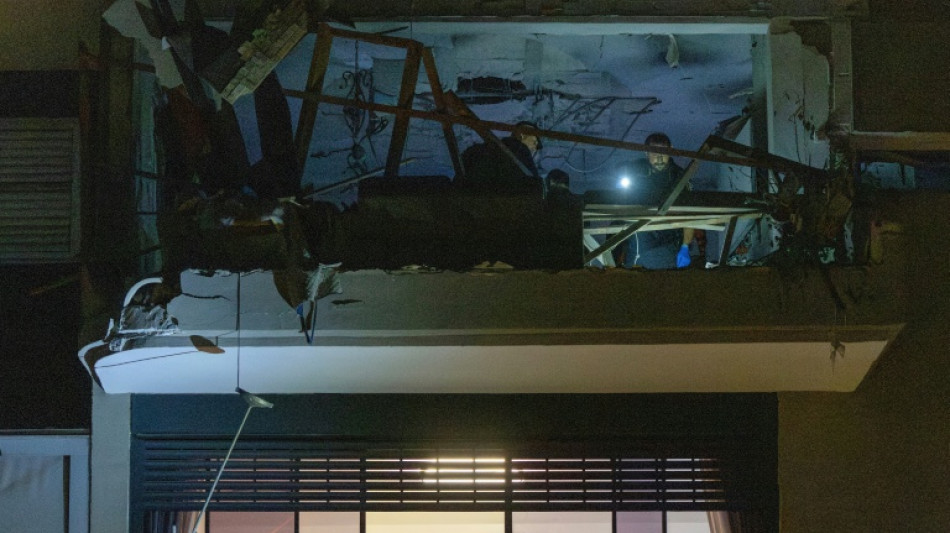
Police said a cluster bomb hit a residential building in Ramat Gan, a city just outside Tel Aviv, and the roof collapsed on an elderly couple.
Iranian media meanwhile said Israel and the United States had launched fresh strikes across several areas of the country, including Tehran.
Tasnim news agency said "seven people were killed and 56 were injured in an American-Zionist attack on residential areas in Dorud town" in Lorestan province.
AFP could not independently verify the figures.
The war has engulfed the region, from Gulf nations to Iraq and nearby Lebanon.
In Lebanon, Israel struck central Beirut multiple times Wednesday.
The country was drawn into the conflict when the Iran-backed group Hezbollah launched rockets towards Israel over the ayatollah's death
A line of cars stretched as far as the eye could see along the country's southern coast as residents of affected areas fled to the ancient city of Sidon in search of safety.
Nidal Ahmad Chokr initially intended to stay put but finally decided on Tuesday to leave his village of Jibchit, as the air strikes intensified.
"Bakers died while making bread" in the village square and "municipal workers were martyred while using bulldozers", the 55-year-old said.
burs-sr/dc
B.Mercier--PS