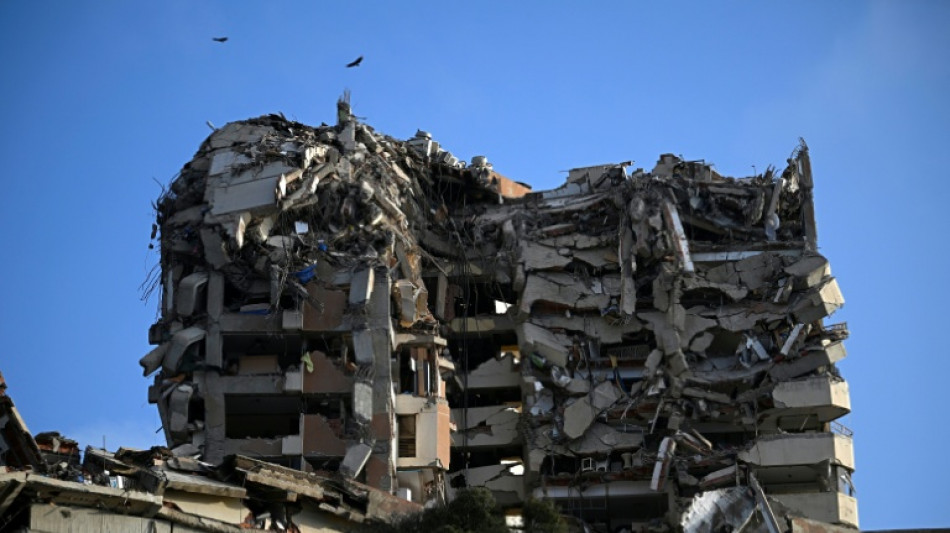
Venezuelans search, suffer one week after deadly quakes / Photo: Federico PARRA - AFP

 London
 20 °C
20 °C
 Manchester
 17 °C
17 °C
 Glasgow
16 °C
Glasgow
16 °C
 Dublin
 17 °C
17 °C
 Belfast
18 °C
Belfast
18 °C
 Washington
19 °C
Washington
19 °C
 Denver
25 °C
Denver
25 °C
 Atlanta
25 °C
Atlanta
25 °C
 Dallas
31 °C
Dallas
31 °C
 Houston Texas
31 °C
Houston Texas
31 °C
 New Orleans
29 °C
New Orleans
29 °C
 El Paso
25 °C
El Paso
25 °C
 Phoenix
32 °C
Phoenix
32 °C
 Los Angeles
26 °C
San Diego
28 °C
San Francisco
17 °C
Chicago
Los Angeles
26 °C
San Diego
28 °C
San Francisco
17 °C
Chicago
 19 °C
Minneapolis
15 °C
Seattle
12 °C
Portland
13 °C
Salt Lake City
23 °C
Las Vegas
31 °C
Miami
31 °C
Jacksonville
26 °C
San Antonio
31 °C
Bermuda
19 °C
Minneapolis
15 °C
Seattle
12 °C
Portland
13 °C
Salt Lake City
23 °C
Las Vegas
31 °C
Miami
31 °C
Jacksonville
26 °C
San Antonio
31 °C
Bermuda
 26 °C
Nassau
16 °C
Iqaluit
4 °C
Yellowknife
7 °C
Anchorage
7 °C
Fairbanks
2 °C
Barrow
0 °C
Calgary
8 °C
Edmonton
24 °C
Winnipeg
16 °C
Goose Bay
19 °C
Halifax
14 °C
Boston
13 °C
Ottawa
23 °C
Toronto
22 °C
Detroit
20 °C
Cleveland
20 °C
New York
16 °C
Baltimore
18 °C
Philadelphia
14 °C
Nuuk (Godthåb)
3 °C
Hong Kong
26 °C
Nassau
16 °C
Iqaluit
4 °C
Yellowknife
7 °C
Anchorage
7 °C
Fairbanks
2 °C
Barrow
0 °C
Calgary
8 °C
Edmonton
24 °C
Winnipeg
16 °C
Goose Bay
19 °C
Halifax
14 °C
Boston
13 °C
Ottawa
23 °C
Toronto
22 °C
Detroit
20 °C
Cleveland
20 °C
New York
16 °C
Baltimore
18 °C
Philadelphia
14 °C
Nuuk (Godthåb)
3 °C
Hong Kong
 28 °C
Singapore
28 °C
Singapore
 29 °C
Melbourne
27 °C
Canberra
11 °C
Adelaide
13 °C
Darwin
26 °C
Perth
14 °C
Fort Worth
31 °C
Honolulu
26 °C
Sydney
29 °C
Melbourne
27 °C
Canberra
11 °C
Adelaide
13 °C
Darwin
26 °C
Perth
14 °C
Fort Worth
31 °C
Honolulu
26 °C
Sydney
 16 °C
Johannesburg
21 °C
Dubai
33 °C
Mumbai
29 °C
Zürich
20 °C
Tokyo
18 °C
Seoul
18 °C
Delhi
22 °C
Beijing
18 °C
Riyadh
36 °C
Prague
18 °C
Pennsylvania
17 °C
Valletta
16 °C
Johannesburg
21 °C
Dubai
33 °C
Mumbai
29 °C
Zürich
20 °C
Tokyo
18 °C
Seoul
18 °C
Delhi
22 °C
Beijing
18 °C
Riyadh
36 °C
Prague
18 °C
Pennsylvania
17 °C
Valletta
 24 °C
Manama
36 °C
Warsaw
13 °C
Stockholm
13 °C
24 °C
Manama
36 °C
Warsaw
13 °C
Stockholm
13 °C
Venezuelans, with help from around the world, were still searching Wednesday for survivors a week after massive earthquakes killed nearly 2,000 and left thousands unaccounted for.
Survivors were mourning while battling shortages of food and shelter, but searches of the scores of flattened apartment buildings have carried on and saved lives.
A three-year-old boy was rescued alive from the rubble in Caracas on Tuesday, a Jordanian rescue team said, a full six days after Venezuela's most powerful quake in over a century.
"We're late, we're very late... but our aim is to keep saving lives, to be able to save those citizens who are trapped under the rubble, who still need us," said Luis Arteaga Benatuil, member of Spanish search and rescue group, after landing arriving Wednesday in Venezuela.
The rescues have come long after the 72-hour period considered critical for survival and as the UN refugee agency said "food shortages are widespread in hard-hit port city of La Guaira.
"The situation is quite critical," said Lia Poggio, head of mission in Venezuela for the International Organization for Migration (IOM).
The 7.2 and 7.5 magnitude shocks -- one of the worst earthquake disasters in Latin American history -- collapsed whole residential complexes on June 24 and prompted frantic search-and-rescue operations for survivors trapped in the ruins.
Venezuela's National Assembly President Jorge Rodriguez said Tuesday that deaths had risen to 1,943, with more than 10,500 injured after one of Latin America's worst earthquake disasters.
He added that nearly 6,500 people had been rescued from the rubble in La Guaira, but that number was likely closer to 20,000 including those who escaped or were helped out by family.
Many Venezuelans have not hidden their anger at the government's slow response to the disaster in a country already struggling with decades of economic crisis that has weakened infrastructure and health services.
"They give out supplies here, but sometimes people nearly kill each other for food... It's like a cockfight," Daniela Armas, 18, a vendor in La Guaira, said after waiting to get food an emergency shelter.
The UN agency said it needed some $14.85 million to scale up aid and temporary shelter for 30,000 people over six months.
The quakes likely damaged or destroyed 58,870 buildings, according to a preliminary assessment of satellite data published by NASA.
With thousands in need of help, World Health Organization spokesman Christian Lindmeier said health services in Venezuela were overstretched and under "extreme pressure."
"There's an increased risk now of outbreaks of vaccine-preventable diseases" such as measles and diphtheria, due to low pre-earthquake vaccination coverage, he said.
- Bare hands -
As international rescue teams from the US, Mexico and dozens of other countries scrambled with trained dogs and heavy equipment to dig out survivors, Venezuelans began burying the dead they could find.
Others were frantically searching by hand for missing loved ones in the rubble, but also in hospitals and morgues.
Darvin Silva, 37, described how he battled to reach his mother, who died under a pillar in a collapsed building.
"The effort it took me to get her out of there with my bare hands, with sledgehammers, with pickaxes... you can't even begin to imagine," he said.
"I hope that I can now offer her the rest she deserves," he said.
Around 50,000 people are still listed as missing, according to the UN.
- Victims mourned -
Some seven million people in Venezuela would be affected by the disaster, the UN has said, with the quakes knocking a $6.7-billion hole in the economy -- or six percent of Venezuela's GDP.
A total of 27 countries have mobilized nearly 40 search-and-rescue teams. They include more than 2,000 troops and personnel, along with more than 160 dogs, according to Gianluca Rampolla, the UN coordinator in Venezuela.
At the makeshift morgue at La Guaira's port, many are still waiting for the remains of their loved ones who are presumed dead.
"My family is there -- I'm told my sister and her children are there, as well as the children of my brother," Wilker Molalla told AFP as he waited to identify the remains.
"There were 11 people in my household," he said. "Only two of us survived because we were at work."
burs/hol
O.Bruneau--PS